
On the Road is a weekday feature spotlighting reader photo submissions.
From the exotic to the familiar, whether you’re traveling or in your own backyard, we would love to see the world through your eyes.
Albatrossity
The next set in this series is non-native animals in New Zealand. And there are a lot of those, from insects to fish to birds to large mammals, thanks to the intervention of the so-called Acclimitisation Societies in the 19th Century. It is almost directly across the globe from England, and the early European settlers missed their native land, so they set about to make it as much like England as possible. Besides clearing forests and planting crops and fighting with the Maori, they imported English and North American creatures. Some were to be hunted (moose, deer, quail, turkeys), some were to provide native birdsong (thrushes), some were to provide good fishing (salmon and trout), and some merely escaped or went feral (rats, cats, stoats, etc.).
All of these animals, if they persisted in this strange part of the world, had a deleterious effect on the native birds. In fact, the only known specimens of an endemic (and now extinct) NZ bird, the Stephens Island Wren, were collected by a single cat that belonged to the lighthouse keeper. Stoats and rats were the primary predators that nearly exterminated the Takahe. And the non-native birds and insects compete for nesting habitat, insect food, nectar, and other items that are important to the survival of the native birds. This scenario has been repeated on islands around the world, but nowhere was it as purposeful and widespread as it was in New Zealand.
Map of places mentioned in this post.
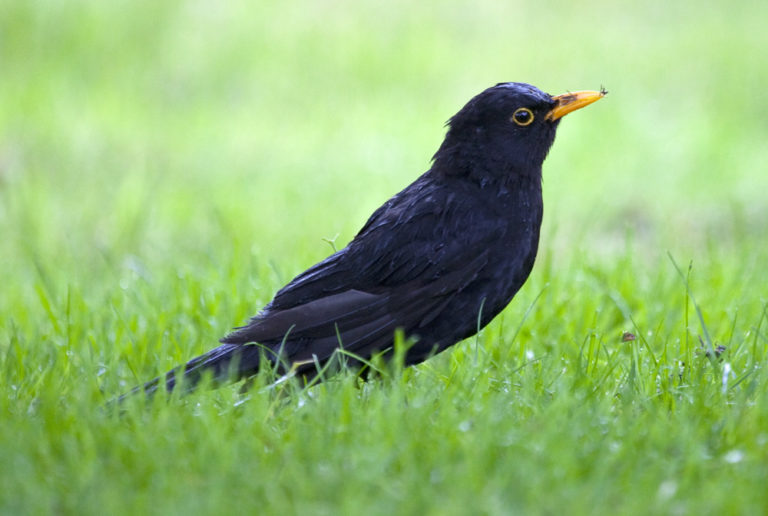
European birds were imported many times, and although not all of them became established, enough did so that the English settlers could hear birdsong reminiscent of their native England in woods and gardens throughout New Zealand. This European Blackbird (Turdus merula), photographed in Auckland, was introduced multiple times in multiple locations starting in 1862, and is now probably the most widespread bird in the country. Four-and-twenty of them are needed to make a pie, I recall.
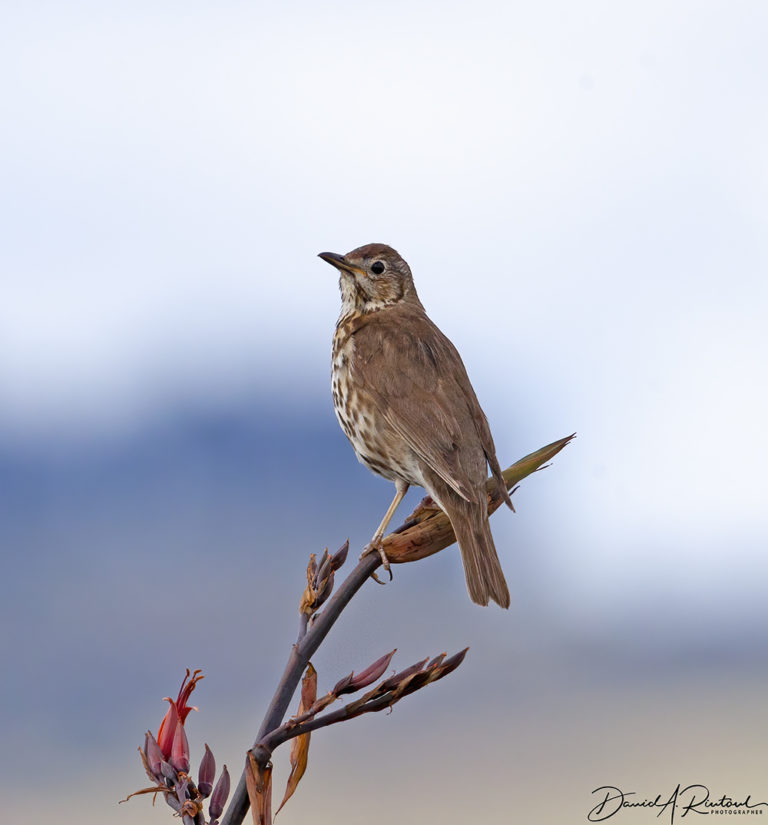
Another European thrush that is abundant in NZ is the Song Thrush (Turdus philomelos). It is smaller than the Blackbird, but makes up for that in song volume and persistence. This one was photographed near the Miranda Shorebird Center on the North Island, and is perched on an abundant and important plant, New Zealand Flax (Phormium tenax). This is not related to actual flax (alternative flax, I suppose), but the leaves were used by the Maori as a source of fibers for weaving, and the native honeyeaters like the Tui and Bellbird feast on the nectar from its abundant flowers.
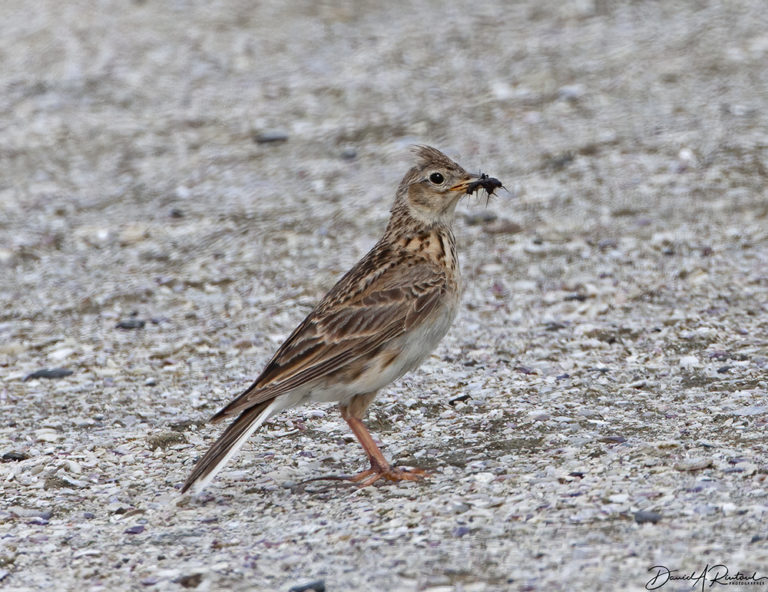
The Skylark (Alauda arvensis) is another bird that is well-loved by the British, and was imported into NZ several times starting in 1864. They were so successful that NZ birds were used as the source of birds that were imported to Hawaii in 1870, alas. They have a beautiful song, given during an aerial display, and are mentioned by Shakespeare in several of this plays, most notably Romeo and Juliet. This one was feeding youngsters at Miranda.
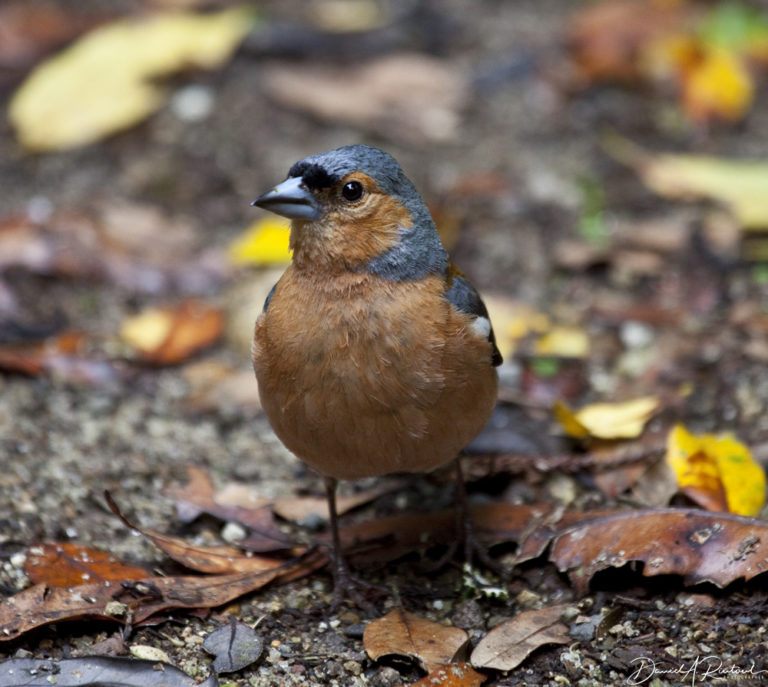
The Chaffinch (Fringilla coelebs) was not an immediate success when first introduced, but is now widespread across the country. Since it is a seed-eater, and most NZ native birds are not, it is not known to have deleterious effects on native bird populations. This one was in the Maungatautari (Sanctuary Mountain) preserve on the North Island.
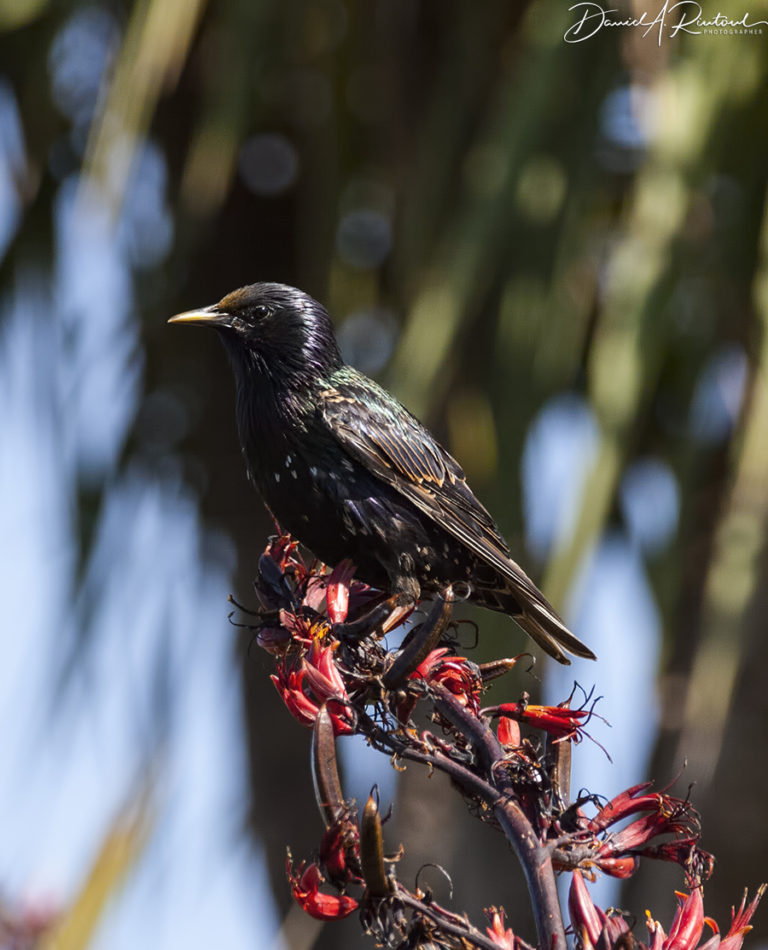
European Starlings (Sturnus vulgaris) were introduced not for their songs, but for insect control, beginning in 1862. This was the very first bird species that I saw when I stepped off the plane on my very first trip to New Zealand; they are abundant in many English-speaking nations and former colonies around the world, including the US. Photographed near Christchurch.
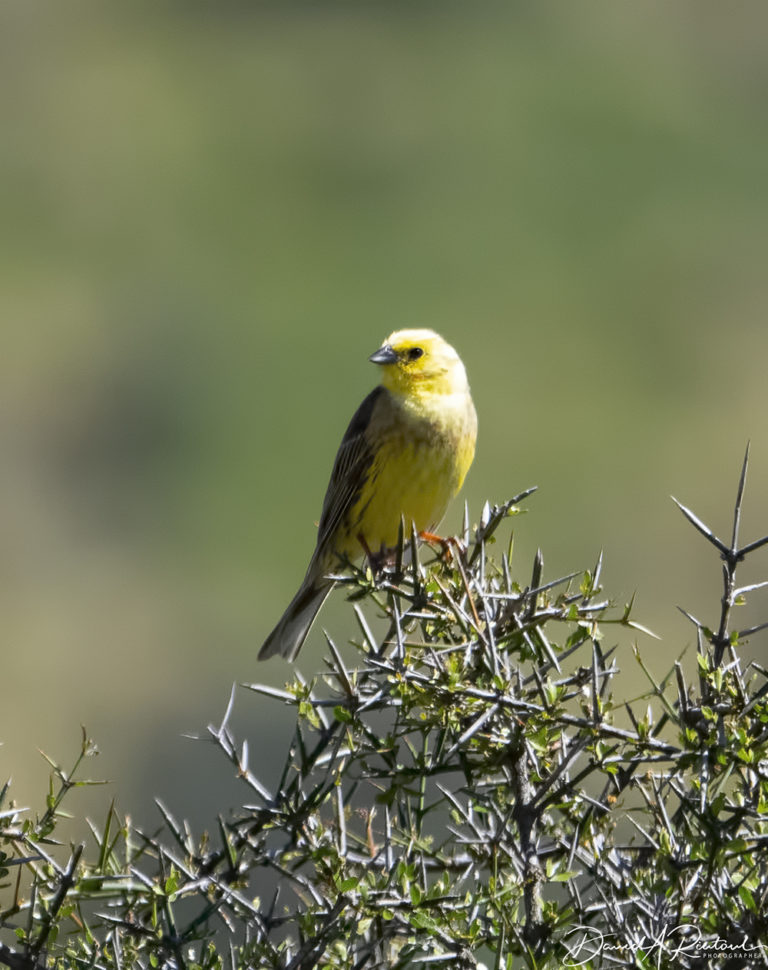
The Yellowhammer (Emberiza citrinella) is another European finch, and can be found in open county throughout New Zealand. This one was near Lake Heron in the Southern Alps above Christchurch, perched on the only native thorny plant in New Zealand, Matagouri (Discaria toumatou). Yellowhammers are no longer common in Britain, and a fascinating recent study documents how the song dialect of New Zealand birds, imported a century and a half ago, is no longer heard in the UK.
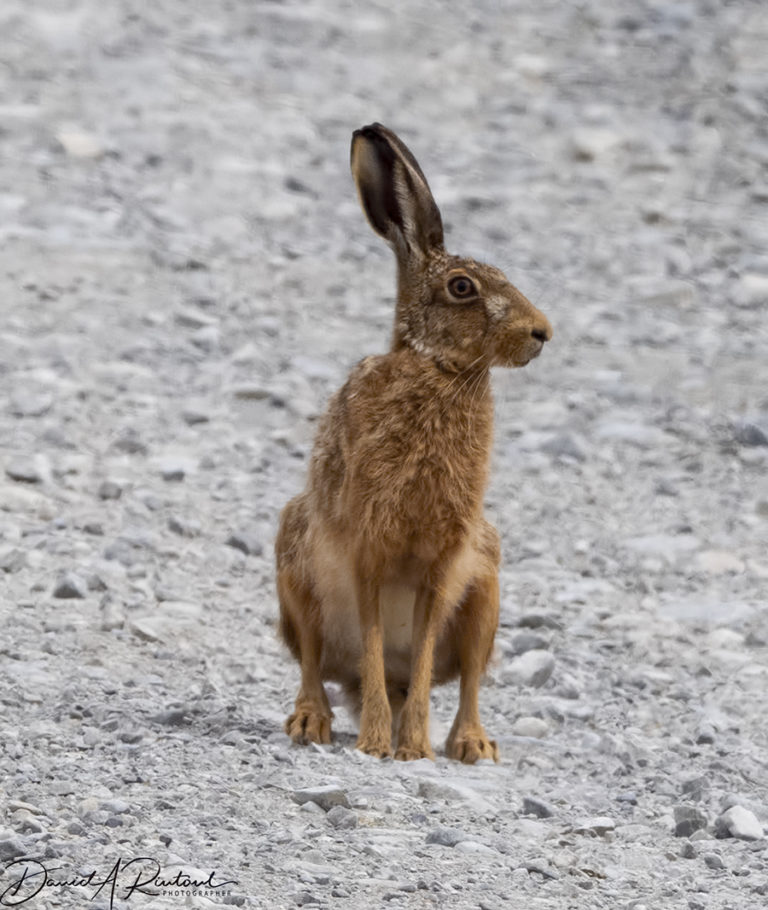
Another immigrant from the UK is the Brown Hare (Lepus europaeus). The first ones arrived after leaping from a ship in 1851 and swimming ashore, later they were introduced on purpose so that they could be hunted. As was the situation in Australia, another English colony where hares were introduced, they quickly got out of control and became pests in native and cultivated places across the country. This one was high in the Southern Alps near Erewhon Station.
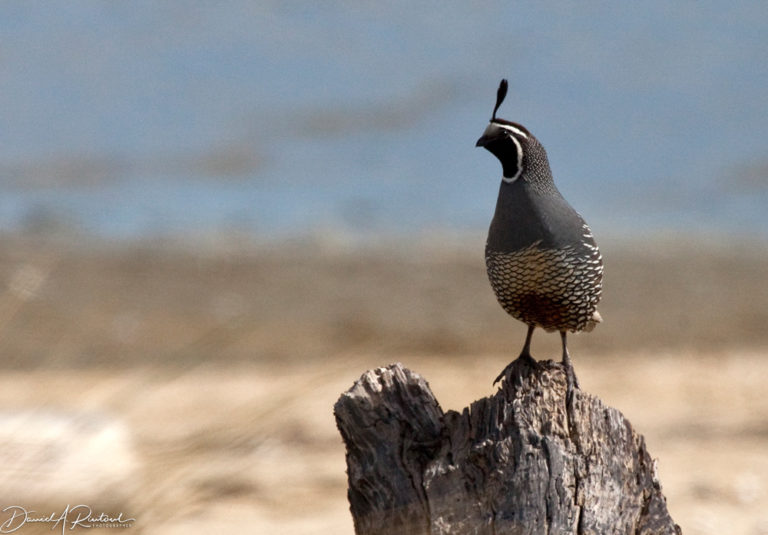
One of the most incongruous sightings for an American birder in New Zealand is the California Quail (Callipepla californica). Introduced as a game bird in 1862, it has been wildly successful in establishing itself in New Zealand. They are literally everywhere. This male was standing guard on Kaiteriteri Beach while his mate and kids scurried off to cover.
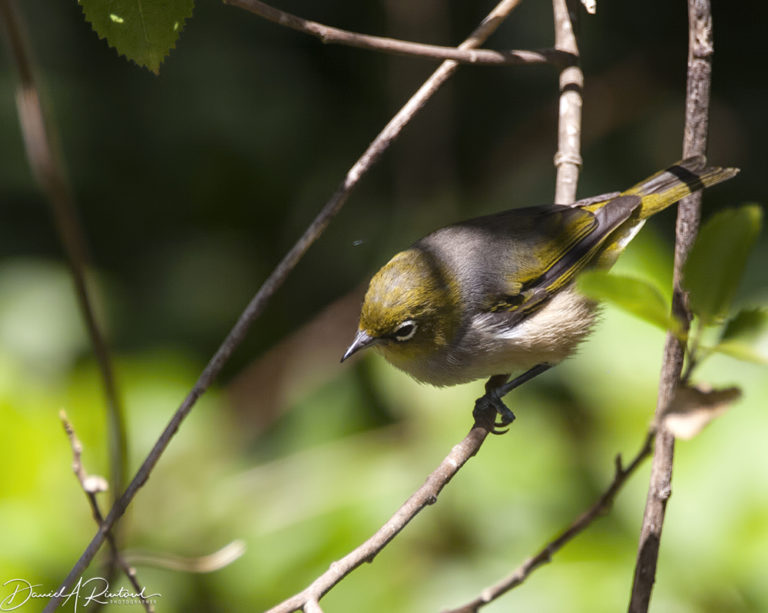
Some birds got to New Zealand without apparent human assistance. One of these is the Silverye (Zosterops lateralis), which came across the Tasman Sea from Australia in the 1850s and is now abundant across New Zealand. This one was near Nelson.
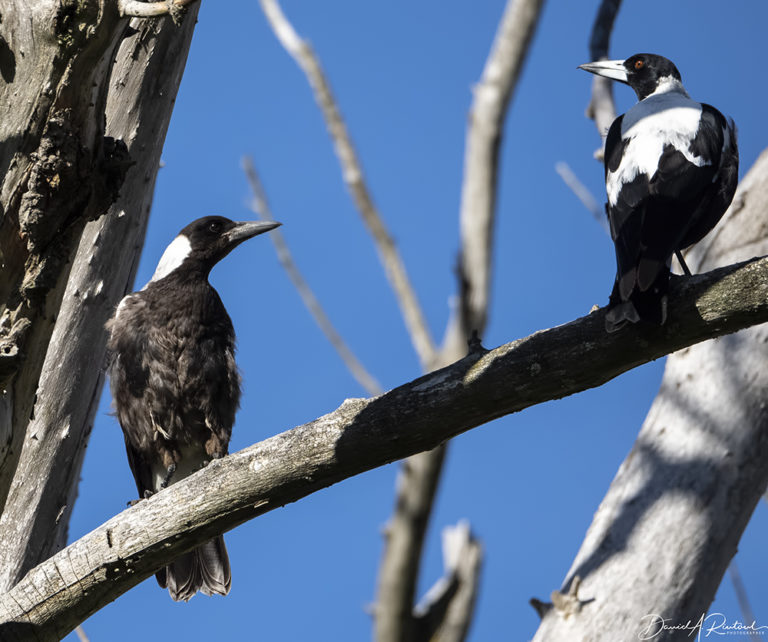
Another immigrant from Australia, introduced for purposes of insect control by the Acclimitisation Societies in the 1860s, is the Australian Magpie (Gymnorhina tibicen). A large and striking bird with an interesting yodeling song that is sung by both the males and the females, it is abundant in some places in New Zealand and absent from others. This parent and young bird were at Lake Heron Station.
eclare
What an interesting history of the fauna in NZ.
Gvg
I had not known there were actual societies whose purpose was to introduce non native fauna. How weird. I do know there was some individual in America that tried to introduce every animal mentioned in Shakespeare’s play. That always seemed slightly daft to me. America’s most damaging invasive species that I know of have been tree diseases. Dutch Elm disease or Chestnut blight for example. The chestnut was a huge food source for not just people but animals like bears, deer and rabbits.
OzarkHillbilly
Gawddamned immigrants, BUILD THE WALL!
Paul in St. Augustine
@Gvg: One can say perhaps the most invasive species are humans, who really need to clean up their act.
J R in WV
Well, I knew people introduced many invasive plants and animals all over the world, so I’m not surprised that there were organized groups trying to do such nonsensical things back then.
The Dept of Ag and Soil Conservation Service are just two agencies in the US that have gone way overboard with introducing foreign species that we can never get rid of. Not to mention all the scourges introduced by accident killing off important tree species. Ash wood was so valuable, and those trees are all gone now. All Gone!
JanieM
@J R in WV: I have a cathedral ceiling of ash boards. The woodwork in my apartment (built in 1995) and the kitchen cabinets — all made of ash, cut not far from where I live. It grieves my heart full sore that the ash trees are gone. The only thing worse would be to lose the maples.
*****
The whole business of English settlers wanting to remake NZ into something they’re familiar with reminds me of the transition within my lifetime of people from other parts of the country moving to California and Arizona. I heard this one often when I was growing up: “Oh, I feel better out there, my allergies don’t bother me as much” — except “I need the flowers and shrubbery I’m familiar with” — …
*****
Pics: gorgeous. And so much education as a bonus! The chaffinch may not compete with native birds for food, but is it a threat in any other way? I’m thinking of what house sparrows do to bluebirds and cliff swallows (the latter of which I’ve seen up close and bloody).
Albatrossity
@JanieM: As far as I know, chaffinches are not a problem in any way for the native birds. There is more information on the NZBirdsOnline website, which is a fabulous resource for learning about the birds of NZ.
JanieM
@Albatrossity: Thanks — I will check it out.
StringOnAStick
A few years ago we rented a local’s vacation home on the Big Island, and it included their library. I looked through the bird guide and so many were introduced from the mainland, some as recently as the 1970’s! The given reason at the time was that “too many of the native birds were drab or not good singers”.
A book in that house had the story of how a local business got permission to import a batch of chameleons for the home exotic pet trade. When they arrived they apparently didn’t look good at all so they left the open box (!) in the sun, hoping to revive them. Of course many escaped and the book claimed there was now a reproducing population in that area of Hawaii; I don’t know if that’s still true or not but I get Notmax knows.
A woman from anywhere (formerly Mohagan)
Great pictures, thanks! I encountered the European Blackbird song in Brussels last year – I could hear the lovely song from my hotel window. (It was a wonderful old-fashioned hotel with windows that opened). It was a puzzle figuring out what bird it was since it had to be common (I was two blocks from the Grand Place), but I had no idea what. One of my fellow tourists, from England, IDed it as a Blackbird, which I originally discounted since California Red-Winged Blackbirds have a very scratchy (not lovely) “song”. Thus it was I learned not all Blackbirds have similar songs. But when I get to NZ I will have no trouble IDing the CA Quail!