
Medium Cool is a weekly series related to popular culture, mostly film, TV, and books, with some music and games thrown in. We hope it’s a welcome break from the anger, hate, and idiocy we see almost daily from the other side in the political sphere.
Arguments welcomed, opinions respected, fools un-suffered. We’re here every Sunday at 7 pm.
Tonight let’s talk about the classics!
So let’s talk about classics. But let’s expand it a bit. Not just books like Moby Dick or Jane Eyre or Pride and Prejudice or A Tale of Two Cities.
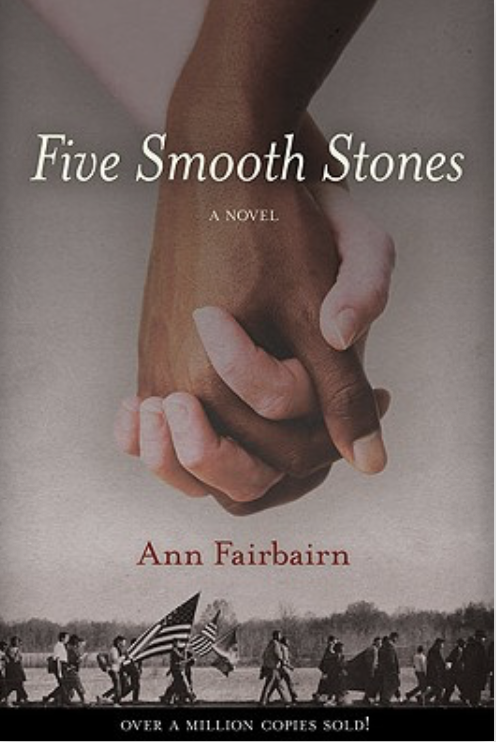
I’m also thinking also about books like The Autobiography of Malcom X and Rules for Radicals and Our Bodies, Ourselves. Authors like Marge Piercy or Katherine V. Forrest or Maya Angelou and books like The Color Purple. Books where you found kindred spirits, and could read about people like you.
Two links to help get you thinking. 100 Must Read Classics chosen by Penguin books readers, and faber’s Black History Month Books: Classic Titles by Black Authors.
So… classical classics and irreverent classics and eye-opening classics – and you get to be the judge of what is a classic, it doesn’t have to be on anybody’s classic list but your own.
In case you are new to Medium Cool, these are not open threads.
Suzanne
I was thinking last week about two books that I read in freshman year English class, and how much they blew my mind wide open: The Fire Next Time, by James Baldwin, and White Noise, by Don DeLillo. Both of them, unquestionably, classics.
Steve LaBonne
Octavia Butler, Parable of the Sower and Parable of the Talents. Uber-classics of speculative fiction and scarily prophetic.
Craig
I like The Autobiography of a Brown Buffalo by Oscar Zeta Acosta. Crazed stories from Hunter Thompson’s running buddy lawyer.
lauryn11
@Suzanne: Ralph Ellison’s The Invisible Man did the same to me.
piratedan
classics…. I’ve enjoyed…
To Kill a Mockingbird – Harper Lee
Nine Princes of Amber – Roger Zelazny
The Lord of the Rings – J.R.R. Tolkein
there’s a whole boatload of classics that left me indifferent but hey, sometimes you’re not simply not ready for the story that the writer wants to tell.
Craig
@Suzanne: agreed. I read Great Jones Street before White Noise, but yeah. Great Jones Street is so weird. Giant RockStar Bucky Wonderlick hiding out having adventure.
Suzanne
@lauryn11: I recently grabbed a copy of Invisible Man at a Little Free Library! So much book backlog, but I’m so excited to read it.
Tom
54 Miles, Leonard Pitts Jr.
He’s writing again and has a substack. Highly recommend
Mel
@Steve LaBonne: Absolutely those. Also, Kindred.
Louise Erdrich’s Love Medicine is hauntingly beautiful. Multiple storylines / voices, but June Kashpaw lingers in my mind decades after I last read the novel.
cope
Peter Matthiessen’s “The Snow Leopard” is on my list of such books. I think I have referenced it here before as a book I carried with me during my vagabond years in the ‘70s.
It has exotic locals, compelling characters, science, Buddhism, danger and privation, death and loss and is extremely well written.
Oh yeah, and “Moby Dick”.
Suzanne
I know that Medium Cools are not open threads, but I wanted to refer back to a discussion we had some months ago about books that were formative for us as kids/young adults. I was looking for some early chapter books for Spawn the Youngest, and I found this series called Zoey and Sassafras. They’re now Spawn’s favorite thing, no doubt. They’re about a young Black girl who finds out that she lives near magical creatures, and she has to use science concepts to help them when they have troubles. They’re at roughly the reading level of the Junie B. Jones and Ivy and Bean series, but the magical creatures and science make them much more fun for Spawn. Gift idea for any of the young ones in your life!
Craig
I don’t know if this a classic, but Terry Southern’s Blue Movie is a wild ride. World’s greatest film director(thinly disguised Kubrick) and sleazy producer Sid Krassman try to make a high brow porn movie. It gets crazy. The Vatican becomes involved. Lovely little gem.
Omnes Omnibus
Scaramouche by Rafael Sabatini. It a very personal choice of classic.
London Calling by The Clash.
Vivaldi’s violin concertos.
Austin Healey 100-6 BN6.
Jambon beurre sandwich.
Eggs Benedict.
That should do for starters…
Craig
Dashiell Hammett’s Red Harvest. The big daddy of The Continental Op stories, the original Man With No Name. Spawned Yojimbo and A Fist Full of Dollars.
Matt McIrvin
I was deeply influenced by Douglas Hofstadter’s Gödel, Escher, Bach, but in hindsight from 2026 I am not sure about whether it was a good influence or how well most of it holds up. He certainly had a lot of ideas about the development and purpose of artificial intelligence that were nothing like what has actually happened.
Hildebrand
The Cross and the Lynching Tree – James Cone
I would argue that it’s one of the most important works of theology (and history) in the 20th century.
Hildebrand
La Frontera – Gloria Anzaldua
Just look at that parking lot
Going with some classic ghost/horror tales. Start with Algernon Blackwood, who wrote in the early 1900’s. His short stories The Willows, The Wendigo, The Empty House & The Valley of the Beast, are some of his best known works. He was an avid outdoorsman and many of his stories take place out in remote areas. The Willows is considered to be one of the scariest horror works ever written.
Matt McIrvin
…And then on the other side there’s the brilliant Polish science fiction author Stanisław Lem (who Hofstadter loved too)… he wrote a bunch of stuff about AI that was eerily prescient, much more on point. Check out the collections Imaginary Magnitude and A Perfect Vacuum and try to figure out how he managed to dream up some of the stuff he said there, back in the early 1970s. The section “A History of Bitic Literature” is basically talking about LLMs.
Chetan R Murthy
I know this is a little off the beaten path, but I feel like Tinker Tailor Soldier Spy is a classic, but not in the Spy literature genre, But rather the literature of dealing with modern bureaucratic life.
zhena gogolia
I recently read Madame Bovary in the translation by Lydia Davis, and although the novel had left me cold in the past, in this translation I devoured it. Highly recommended.
That led me on to tackling Les Misérables, which I am slogging through at bedtime. Over halfway there, but I am tiring. As long as he sticks to Jean Valjean, it’s fabulous, but there are way too many digressions (50 pages on the Battle of Waterloo). He makes Tolstoy look terse. Another great translation (Christine Donougher, Penguin), but Hugo can really be insufferable.
All the talk in the media about Wuthering Heights, although the movie sounds dire, caused me to order a Penguin edition of that with footnotes, because the last time I tried to reread it, the dialect stopped me cold. I can’t imagine how I was able to read it as a kid. I guess visions of Laurence Olivier kept me going.
I can endlessly reread Jane Eyre (I know we’re not supposed to mention it, but it’s my favorite novel) and all other Charlotte Brontës, and all of Jane Austen, and Kristin Lavransdatter by Sigrid Undset. I’m fond of the old-fashioned translation, but the modern one is good as well.
zhena gogolia
@Matt McIrvin: Borges was onto it as well.
What Have the Romans Ever Done for Us?
I’ve read that Neuromancer got more right about our corporatized IT future than just about any other Sci-fi novel. Has anyone read it? I know it launched cyberpunk as a subgenre. I’m thinking of reading it.
Chetan R Murthy
The war in Ukraine really turned me off from Tolstoyevsky, but I was always a massive fan of Ivan Turgenyev, specifically _Torrents of Spring_ and _Fathers and Sons_. Also _First Love_.
What Have the Romans Ever Done for Us?
Of all the classics of fantasy literature I feel like A Wizard of Earthsea is somewhat overlooked but really great. Read it to my kid about a year ago and it held up really well.
MattF
@Craig: Agree, specifically about Red Harvest. Not merely a classic, it’s a classic that’s largely unknown outside of the noir detective genre. Read it, damn it.
Craig
@Chetan R Murthy: totally agree. Smiley’s ability to negotiate the bureaucracy of The Circus is driving a lot of story there.
Chetan R Murthy
@Craig: For me, one thru-line was how he was constantly rediscovering (and thru him, -we- rediscover) the lesson that what bureaucracies want is often not what they say they want. As in _The Wire_, where ostensibly the homicide department is there to find and prosecute murderers, but in fact, it’s there to close cases, which is a completely different thing.
Timill
@What Have the Romans Ever Done for Us?: Frequently, but not in 30+ years…
Just remember “the sky over the port was the color of television, turned to a dead channel” means grey static, not brilliant blue.
Craig
@What Have the Romans Ever Done for Us?: total classic. Combination of noir, AI, and good story. Best character enhanced assassin Molly Millions. Also see Burning Chrome a short story where Molly is introduced.
Old Dan and Little Ann
I chose the 2 dogs from my all time favorite book when settling on my nym for this here blog. “Where The Red Fern Grows” by Wilson Rawls. A boy and his dogs. What better? I think it was the first book that ever made me cry when I was about 12 or 13.
AliceBlue
Ecology of a Cracker Childhood – Janisse Ray
The Women’s Room – Marilyn French
@Just look at that parking lot: I read The Willows in high school and it still creeps me out.
Sheila Levine is Dead and Living in New York – Gail Parent. Don’t know if it’s a classic but it’s the funniest book I’ve ever read.
prostratedragon
@Chetan R Murthy: Agree about that; in particular, the ways in which bureacracy makes some people purely instrumental. But that’s a major theme in all LeCarré, I think.
Steve LaBonne
@What Have the Romans Ever Done for Us?: The whole Earthsea series is spectacular, in fact it gets better and better as it goes along. Also, of course, The Left Hand of Darkness, The Dispossessed, and The Lathe of Heaven are fantastic books.
Matt McIrvin
@What Have the Romans Ever Done for Us?: Neuromancer is great but there’s also a lot in it that doesn’t hold up. I think Gibson’s overwrought prose style of that era probably has not aged well. I guess it’s really just an updating of hardboiled noir prose.
The worldbuilding is prescient in some ways and… not, in others: young Will Gibson was a huge space fan who incorporates a lot of the ideas that were current in space futurism of the time, with JAL spaceliners and giant O’Neill cylinder colonies and such… just mixed in with this corporatized post-national greedocracy.
His vision of the future Internet is entirely constructed for narrative convenience: he was one of the first authors to use the cyberpunk trope of hackers modifying their brains so they could physically jack into the Internet and hallucinate cyberspace as a physical environment, at the cost of security countermeasures potentially killing them by frying their brains. Who would do that? Well, maybe if it was the only way to make a living… but of course it was really a way to turn a boring scene of computer hacking into an action scene taking place in a fantasy environment, with action-scene stakes.
(I guess Samuel R. Delany’s 1968 novel Nova had had an earlier version of it that was much more benign.)
One of the most famous and clever scenes in Neuromancer involves a character walking past a bank of pay phones.
Mr. Bemused Senior
@prostratedragon: Tinker, Tailor gets my vote too, both the book and the BBC series. I think it really does fit the spy genre, though you might say it’s too realistic.
@Steve LaBonne; agree on Ursula Le Guin
Chief Oshkosh
West with the Night by Beryl Markham
Nearly any Sherlock Holmes (I know, I know, but I was young and impressionable!)
Less by Andrew Sean Greer
Gin & Tonic
Not everyone’s cup of tea, I know, but Gravity’s Rainbow says a lot about the modern world.
eclare
Judy Blume. Are You There God, It’s Me Margaret.. I had always loved reading, and I loved this more.
Craig
@Matt McIrvin: I think of that whenever I randomly see an old payphone, or occasionally a place where old payphones were in an airport. That scene is awesome.
Eric S.
“One Flew Over the Cuckoo’s Nest” was the first time I thought the book was better than the movie.
NeenerNeener
Manly Wade Wellman wrote really atmospheric horror stories about the Appalachian mountains. I read The Desrick on Yandro when I was about 10 and I still remember the creeps it gave me over 55 years later.
JD Vance gives me the same creeps today.
eclare
Wow this thread wandered. My bad.
What Have the Romans Ever Done for Us?
@Steve LaBonne: I liked the first three best but should read the later ones again. Left Hand of Darkness was very good too.
chrome agnomen
@Chetan R Murthy: I mentioned the entire Quest for Karla in a related thread over at Edroso’s site recently. I practically know half the dialogue, and have a fondness for the one of the three novels not done by the BBC, the Honorable Schoolboy, and jerry westerly in particular.
RevRick
@Hildebrand: Yes, Cone’s book made this honky take a hard look at the white church and find it often wanting.
As for a fictional work with a lot of theological oomph, Dr. Vernard Eller described Moby Dick as the book that seems missing from the Bible. He saw it as a cautionary tale about going on crusades.
Speaking of which, on July 4, 1821, then Secretary of State John Quincy Adams warned against “going abroad seeking monsters to destroy.” Which is exactly what we are doing right now.
lowtechcyclist
Anybody mentioned Catch-22 yet?
Craig
The Three Musketeers. Totally captivated me as a kid. Beautiful storytelling. I remember realizing I was being seduced by evil by The Countess De Winter. Then I saw Faye Dunaway as Milady and $crush$. I love that book, love those two Richard Lester movie.
RevRick
I’d add Call of the Wild to the list, but that book has gone to the dogs.
Chetan R Murthy
@chrome agnomen: It has been 30+ yr since I read it last. But I still remember that scene in the bar during the rainstorm, at the start of the novel. Le Carre really knew how to write boy howdy.
NotMax
Gulliver’s Travels and One Hundred Years of Solitude come to mind.
Omnes Omnibus
@chrome agnomen: Jerry Westerby and Peter Guillam are two of my favorite characters from the world of the Circus.
Matt McIrvin
When I was an older kid, for a while I spent way more time reading nonfiction than fiction. I already mentioned Hofstadter; Carl Sagan’s stuff was a huge influence too, Broca’s Brain and Cosmos.
A kind of obscure one I loved was L. L. Larison Cudmore’s The Center of Life: A Natural History of the Cell. The science in it is probably way out of date by now, but that might have been where I first heard of Margulis’s endosymbiosis theory of mitochondria? (then very speculative, now accepted science)
Just look at that parking lot
@Eric S.: Yes. I was disappointed they didn’t work Chief Bromden’s hallucinatory Fog Machine into the movie. One of my favorite parts of the book. Maybe that would have been to strange for a mainstream movie release.
lowtechcyclist
@Chetan R Murthy:
Please, they’re very different writers. Never could get into Tolstoy, but got pulled right in by The Idiot, and loved The Brothers Karamazov.
Also loved The Flying Karamazov Brothers, but that’s a whole different story.
prostratedragon
I went on a short novel kick years ago. Two memorable ones were The Bluest Eye and Things Fall Apart. During a similar one later I read most of Chandler and Caine, both of who’s novels tend to the shorter side. A friend gave me a collection of a few V.I. Warshawsky novels by Sara Paretsky, and I enjoyed them enough to seek out a few more.
Chetan R Murthy
@lowtechcyclist: I didn’t mean any slight to Tolstoy or Dostoyevsky as authors, rather, the term Tolstoyevsky refers to the corpus of Russian Literature — I think, of the 19th century. Whenever I think about picking up Chekhov’s short stories, I’m reminded of the war, and then I put ’em back down. That’s all I meant.
Just look at that parking lot
I’ll continue with short classic horror stories. I guess including Edgar Allen Poe is mandatory, but I’m going with three lesser know ones. Berenice should get mentioned more. It has one of Poe’s must demented characters. I think about this story whenever I see T.V. adds for dental implants.
Not really a horror tale, but Descent into the Maelstrom always fascinated me. Picturing that fisherman inside the giant whirlpool messed with me.
Hop-Frog is one of the great revenge tales ever told. True love & hatred are some kick ass motovators.
.
zhena gogolia
@lowtechcyclist: Plus neither of them have anything to do with the war in Ukraine.
zhena gogolia
@Chetan R Murthy: OMG, you’re blaming Chekhov for this?
zhena gogolia
@Just look at that parking lot: Hahaha, “Berenice” is a great one!
Chetan R Murthy
@zhena gogolia: I’m not blaming -any- of them. Quite to the contrary, I have -loved- reading Tolstoy, Dostoyevsky, Turgenyev (so much, sooo much), Chekhov. But every time I think about reading them, I -stop-, b/c the mere fact that they’re Russian writers turns me away.
I mean, the same thing happens when my random home music player serves up Van Morrison or Clapton: I am reminded that they were shits during COVID, and more often than not, I hit “skip”.
Yes, maybe I should surmount that reaction. But it’s there. Tolstoy isn’t responsible for the war in Ukraine. But that doesn’t change my gut reaction.
prostratedragon
@lowtechcyclist: Crime and Punishment has been an occasional reread for me. Did quite like The Brothers Karamasov.
kalakal
Treasure Island & Kidnapped totally grabbed me as a kid which led me to
Captain Blood
@Omnes Omnibus: Sorry, Scaramouche is great but Captain Blood, both book and the Errol Flynn/ Basil Rathbone move will always be my favourite Sabbatini
The Blues Brothers , a totally awesome soundtrack
The Worst Journey in the World – the greatest exploration/survival book ever written
Ringworld
–I’m a sucker for early Larry Niven and this is where all his Known Space stories come togetherThe Mediterranean and the Mediterranean World in the Age of Philip II – completely changed how I viewed history.
The Rules of the Game – Gordon and From the Dreadnaught to Scapa Flow – Marder. I’m a naval history fiend and these 2 perfectly complement each other
A Time of Gifts – Patrick Leigh Fermor, walking across Europe 1933/4 , beautifully written and deeply insightful memoir/travelogue
Sagittarius Rising – Cecil Lewis, amazing memoir, Lewis lied his way to being a WW1 pilot at age 16, then went on to be a flying instructor in 20’s and 30’s China before settling down as a founder member of the BBC. Wonderfully elegaic
narya
Completely agree on LeCarre and LeGuin. I’d add the “fool” trilogy from Richard Russo.
“Born to Run”/“Darkness”/“Wrecking Ball” for Bruce.
American Beauty
My Cousin Vinny
mvr
@Craig: By my lights Hammett wrote in/invented four genres. (1) Red Harvest is one – not sure what to call it. Joe Gores has a series of repo stories that fit this genre. (2) The Maltese Falcon is another – Noir lone private eye, continued to this day by many with Raymond Chandler and Ross McDonald as the classic inheritors. (3) The Glass Key, which is a suspense, shady but not bad free lance operator novel with suspense about whom he’s working for. This spawns a bunch of sub versions but also perhaps the hardest to pull off and maybe most original. (4) The Thin Man, etc – comedy/mystery though the books lean more heavily on the former while the movies leaned more on the latter.
All of them great. And of all the biographies of heroes I read, only Hammett rose to admirable in his personal life during the Red Scare. The Continental Op worked for the corporate man (Pinkertons) but somewhat on his own terms. I’m partial to the lone wolf private eye for not working for either the corporations or the state (and I did a bit of legal investigating on behalf of accused criminals back in the day and pretended I was one now and then.)
mvr
The Earth is Enough, by Harry Middleton, is a great nature, growing up, fly fishing novel/autobiography from a few decades back. Middleton was an outdoor columnist in the South who wrote wonderful stuff in general and died young. This book is his masterpiece. It starts in Viet Nam as the kid of an officer who nearly gets killed. Then he is sent to the states to live with relatives in the rural Ozarks.
I bought a used copy for 2 bucks in a fly shop. He died before the second edition came out. But it is now considered a classic by those who like outdoor/nature writing and copies go for quite a bit on the used market, though you can find them for reasonable prices as well.
I’ve read hos other work and it is good too. But this is one of those books that makes me very sad not to have a chance to thank the guy.
Gin & Tonic
@zhena gogolia: It is very difficult to consider the russophilia of “western” academia, especially in the US, as morally neutral. I have written about this before and am not in the mood to rehash it now, plus I know it butters your bread personally, but the worship of the oh-so-great russian composers and authors can be sickening if you actually know history.
I should stop now.
Omnes Omnibus
@kalakal: I came on Scaramouche first.
CaseyL
Evan S Connell is mostly known for his fiction (Mrs. Bridge and Mr. Bridge, one of which became a movie), but his collected essays had a very powerful effect on me:
“The Long Desire,” refers to that essential restlessness that drives people to go off in search of knowledge and adventure.
“The White Lantern,” a wonderful title that refers to Antarctica, and how it looks from space, glowing with reflected sunlight at the bottom of the world. This one is also about adventuring, but more about a search for knowledge than travel and adventure for its own sake.
He also wrote “Son of the Morning Star” about George Custer, which I think was made into a TV movie. An excellent biography that manages to convey Custer’s charisma as well as his awful attitudes.
Craig
@mvr: I love Chandler too. Marlowe is just so inventive in the way he figures things out. I can’t remember the story, but he gets hoodwinked and ends up doped up in a ‘private hospital’ and has to figure out how to escape. So good. Howard Hawks’ The Big Sleep is almost perfect. Cool that Bogart is the sharpest actor for both Chandler and Hammett.
kalakal
@Omnes Omnibus: I think that’s the thing. Like you I became a huge Sabbatini fan, Captain Blood was the first one I read
mvr
@Omnes Omnibus: London Calling is a classic for sure. Only chance I got to see them was after they kicked out half the band, so as a Mick Jones fan I didn’t go to the show from the rump Clash tour when a housemate did. Still sort of proud of that, but sad about it all as well.
Strummer’s death in 2003 sent me into a serious depression about hopes that were not happening. Other things figured in but that symbolized a lot.
Trivia Man
Roll Of Thunder, Hear My Cry
When I read it in elementary school I don’t think I had ever met a black person in real life ) Northern California). With essentially a blank slate in race relations I speculate that it oriented my thinking to a black centered world view that influenced all of my future race experiences and learning. I think it was helpful to me.
Slightly related, it wasn’t until many years later that I realized Snowy Day had only black characters in it. I liked it a lot, the snow was so exciting! (See “california” above). And a BIG CITY was as exotic as could be. Never even noticed that it was a “black” book.
Craig
The Collected Breece D’J Pancake: Stories, Fragments, Letters. West Virginia short story genius. Shot himself. Beautiful little stories.
Mr. Bemused Senior
I wouldn’t call eggs Benedict a “starter.” 😁
kalakal
I could be very happy for a very long time with the collected works of R. L. Stevenson, Rafael Sabattini, Alexandre Dumas, and Arthur Conan Doyle.
Trivia Man
Heinlein, The Past Through Tomorrow may be the one that changed my life. A collection of shorts and novellas published about 1967, it made me think about society and life and death and love in ways I never had before. “Menace From Earth” was the first love story that ever landed with me.
Craig
The Complete Sherlock Holmes. I’ve given this away at least four times since my parents bought it for me as a kid. Timeless. Smart. Insightful. Just great fucking writing.
Melancholy Jaques
OH MY GOD Penguin. You’ve got Don Quixote at 67!?!! You cannot be serious! (John McEnroe voice)
And what is worse is:
Tell me you never read Don Quixote without telling me you never read Don Quixote.
mvr
@Craig:
I believe that Hammett was a script writer for the Big Sleep which I believe they kept modifying on the fly. They morphed two characters into Lauren Bacall and so the plot is a little bit messed up and things don’t make sense. But the atmospherics remain good and that bookstore scene is a thing to itself.
Dialog in the Maltese Falcon comes quite a bit from the book and just zings.
Chandler took short stories that he then wove into his novels with different overall plots. Doing that and ending up with good plots in wonderful novels is just amazing. The desert sanatorium is in The Long Goodbye which is actually my favorite though not the favorite of most critics.
Unfortunately, reading his bio was not inspiring. I read a bunch in a row about among others Chandler, Woody Guthrie, and Hammett and as I noted, only the last left me with same attitude I started with. (Though the Woody Guthrie museum has a display of lyrics in which WG disparages Trump’s dad for being a racist. Which counts for something.)
Timill
@Craig:
if you don’t have the Annotated Sherlock Holmes, you should probably buy it…
[I have a copy]
lauryn11
@zhena gogolia: Madame Bovary has long run up against the “unsympathetic heroine” problem but from a more modern feminine perspective you can feel her restlessness and mania at being trapped. Flaubert’s prose was always reason enough for me. A writer’s writer. A quality translation is key.
Gloria DryGarden
Barbara kingsolver: the bean trees, and its sequel pigs in heaven, also the poisonwood Bible, and most especially Prodigal Summer. And her books of essays.
The color purple, for sure, which floored me on page one, and from which I read aloud certain passages to beloveds. Also, absolutely her book of poetry Horses Make a Landscape More Beautiful
The Prophet, by Khalil Gibran
Smilla’s Sense of Snow
GREEN Eggs and Ham, also Oh The Places You’ll Go. ( if I have to tell you the author, you’re in a heap of trouble)
Star Girl by j Spinelli, yes, it’s young adult fiction. Also The Golden Compass by Phillip Pullman
The Art of Loving by Eric Fromm
The Fifth Sacred Thing by Starhawk. Also her nonfiction spirituality guidebook, The Spiral Dance, though it’s not for everyone.
Dorothy Sayers, all her Lord Peter Wimsey mysteries, which are written with a poetic rhythm that makes them fabulously readable.
Anne McCaffrey, Patricia McKillip, Robin Mckinley multiple fantasy genre books, dragons, magical creatures, novel length fairy tales with extra depth. It’s lighter reading, but have some simplistic but rich allegory.
I second several books others have mentioned. LeGuins Earth sea Trilogy and the books in the series that follow it; were there three, or 4 more. The women’s room, Our Bodies Ourselves, the Snow Leopard ( read from anywhere in the book to gain a deep sense of calm mindfulness and peace.) and those Marge Piercy novels. And of course, Tolkien, including his book of short stories.
And for Omnes, Vivaldis Lute Concertos. (Not a book)
For Spanish language learners/ speakers, the U of Chicago paperback spanish English/ English spanish dictionary, which can get you through a tremendous amount of vocab and verb conjugations, until you need truly a danced words like bassoon, or pumpkin, by which time, you’ll need the Larousse dictionary. (Probably excellent in reverse, for English language learners coming from spanish, but I haven’t tested that usage)
Yeah, I really think all that is essential.
Honorable mention: The children’s poetry, by AA Milne, which comes in a set with Winnie the Poo. Do people still read those aloud to their kids? Might be kind of Anglophile biased.
Mr. Bemused Senior
Me too. It’s great.
narya
@Gloria DryGarden: thank you for reminding me of The Women’s Room! It made me feel less alone.
ljdramone
@Matt McIrvin: another thumbs up for Stanislaw Lem and for Douglas Hofstader’s Gödel, Escher, Bach, an Eternal Golden Braid. I read GEB and Lem’s The Cyberiad when I was about 20 and just getting into computers and programming (this would have been circa 1980, kids.)
I agree that Hofstader’s musings on AI are dated, but to be fair GEB was published in 1979 and things were… kind of different then.
Citizen Scientist
Demon Haunted World, Cat’s Cradle, and A People’s History of the United States.
Gloria DryGarden
The Color purple has an utterly beautiful page long description of what god might be, outside the Christian boxed set. It really moves me, and involves trees, and birds and color, and un-genders god, putting it in terms a person could relate to.
And on page one, she conveys the utter emotional devastation of childhood sexual abuse and its after effects, without being explicit. Amazing.
______________________________________
**There’s one more important classic: Le petit prince. Available in many languages.Not to worry if you didn’t get it in French class. It’s still a worthwhile read.
Gloria DryGarden
@narya: it was a memorable book. It’s been awhile.
p.a.
The Sound and the Fury
As I Lay Dying
The Hamlet
Light in August
Tehanu
I would name some rather obscure fantasy books:
And one movie that ought to be much better known: Carnival in Flanders (1935; original French title is La Kermesse Heroique)
narya
@Tehanu: Long Price was my intro to him. I also love the dragon and coin series (or whatever it’s called; I always forget). LOVE it.
Jacel
@Matt McIrvin: Lem’s “Cyberiad” is one of the funniest books I’ve ever read. Up there with Roth’s “The Great American Novel” which, as such must be, was largely focused on baseball. There is so much about Lem’s story that is propelled by wordplay that I can only imagine what the elements were in the original Polish, but Michael Hamberger’s translation into English produced a convincing and brain bending texture.
NotMax
Obscure but IMHO an unheralded classic, The Death Ship: The Story of an American Sailor by B. Traven (author of The Treasure of the Sierra Madre).
Chris
The Hunt for Red October. A lot of Clancy writing is questionable, but that one just really is a terrific sea story. Jump started the whole techno thriller genre, or at least the modern incarnation; there’s a lot of crap in that as a whole, but the original is a real gem.
In the same vein, The Day of the Jackal. I’m not rightly sure what genre that’s in, and like with Clancy, Forsyth’s quality kind of went downhill over time. But the original is just a classic of competence porn – made even more classic by the fact that its conclusion is basically “but, you can’t plan for everything.”
The Count of Monte Cristo is the revenge epic; there’s a reason it’s been remade and ripped off so many times. Made all the better by the fact that it’s not a Punisher style murder spree, but a Leverage type mind game.
As far as science fiction goes, the Jules Verne and H. G. Wells productions have aged really well – they’re the precursors to Star Wars type spectacle and Star Trek type social commentary, respectively. (I know Shelley wrote before either of them, but I’ve never read Frankenstein).
Chris
@RevRick:
It was good for it’s time, but it’s getting a bit long in the tooth.
Jacel
@Chetan R Murthy: A circa 1970 comedy sketch by The Congress Of Wonders, “Stepney Fetchnik”, did a hillarious job of throwing all Russian fiction tropes into a Waring blender. Perhaps funnier than Woody Allen’s “Love and Death” working that beat.
youtube.com/watch?v=h3J4KnY_ziE
kalakal
@Tehanu: I loved Lud-in-the-mist.
Another obscure one I’m very fond of is Red Moon and Black Mountain by Joy M. Chant
kalakal
I was/ am a great fan of Susan Cooper’s The Dark is Rising sequence
Chris
@Chief Oshkosh:
@Craig:
@Timill:
Love Sherlock Holmes, but have to put in the word for his cross-channel counterpart: Arsène Lupin. If Holmes codified the Great Detective genre, Lupin codified the Gentleman Thief genre.
Trivia Man
@Chris: It ain’t fur everyone
Satanley (aka weasel)
@Craig:
Oh wow, I gotta check this out. Am a huge HST fan but haven’t heard of this before. Thanks for the tip!
Timill
@Tehanu: To not be forgetting Shy Leopardess or Joris of the Rock, now..
[or the Groaci, for that matter]
Chris
Last one: The Killer Angels. I’ve always had a soft spot for it because it’s so rare to get novels that spell out the Yankee POV on the Civil War. The standard narrative for a hundred years after the Civil War was the Lost Cause. It was interspersed sometimes with stories that elided the politics entirely and just talked generically about how awful it was that brothers were killing each other, which became a bigger deal in the late twentieth century as some awareness of the Lost Cause awfulness started creeping into the mainstream. And more recently we’ve finally started to have stories about the black experience, which had been overlooked by mainstream culture for damn near all this time.
But what you damn near never see is the war from the point of view of white Unionists who actually consider their fight a worthy cause, and not necessarily for humanitarian reasons but because they themselves feel threatened. Chamberlain and Kilrain in the book do find the Slave Power horrifying for what it does to black people, but what they feel personally targeted by is the aristocracy in its worldview. They think of it as a nest of medieval, monarchist values, that’s going to extinguish the world created by the American Revolution if somebody doesn’t stop them.
It’s just a terrific thing to finally see a story of why so many people would have signed up for the Union cause beyond abolitionism or simple nationalism – or rather what those things meant to them and why it was important to them, even for the majority who weren’t black.
Jacel
A classic I’ve not seen mentioned in the autobiographical “The Journal Of John Woolman”. A great book not only for the abolitionist and Quaker spirituality subject matter, but the clarity of writing is exemplary for the English language. That aspect left a mark on me that was sustaining to my long career as a technical writer.
Craig
Blood Meridian.
Timill
@Jacel: Well, pfui. This reminded me of The Diary of a Country Parson by James Woodforde, and so I find that the full 17-volume transcription is available to members of the Parson Woodforde Society for a mere twelve quid in membership.
I may be some time…
Craig
@mvr: the bookstore is the best scene in the world outside of In The Mood for Love.
Just look at that parking lot
@mvr: Reading Woody Guthrie’s name triggered a John Steinbeck/Grapes of Wrath vision. Been many years since I have read this, or any Steinbeck stories. The ending smacked me hard. One of the first books I read that had such a dark ending for a non horror/sci-if story.
Paul in KY
@Steve LaBonne: ‘The Left Hand of Darkness’ is her masterpiece, IMO.
Miki
@kalakal: I’ve been listening to the BBC podcast.
Paul in KY
I’ve always thought ‘A Soldier in the Great War’ was a fine read.