

On the Road is a weekday feature spotlighting reader photo submissions.
From the exotic to the familiar, whether you’re traveling or in your own backyard, we would love to see the world through your eyes.
I have been so distracted by The Horrors that I had lost track of how low we were on OTR posts in the queue. We’re good thru Wednesday, and then it looks like we’ll be taking a break until you guys send some in.
Albatrossity
We’re done with kingfishers, but not done with wanna-be kings, at least at the time of this writing. So we’ll start with a new batch of bird images and a new family, the Anatidae (ducks, geese and swans), since it is spring and some of these will soon be coming to a local body of water near you. These are familiar birds for birders and non-birders alike, either as the real thing at your local park, or as cartoon characters. And there are a lot of them; one taxonomy classifies them into 53 genera and 174 species worldwide. We’ll start with some North American species, then head wherever else I have managed to get a halfway decent photograph of a duck.
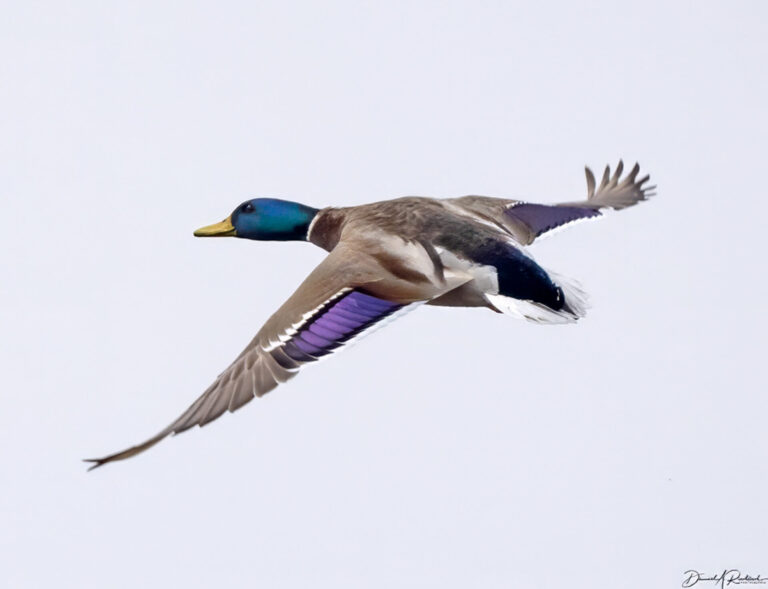
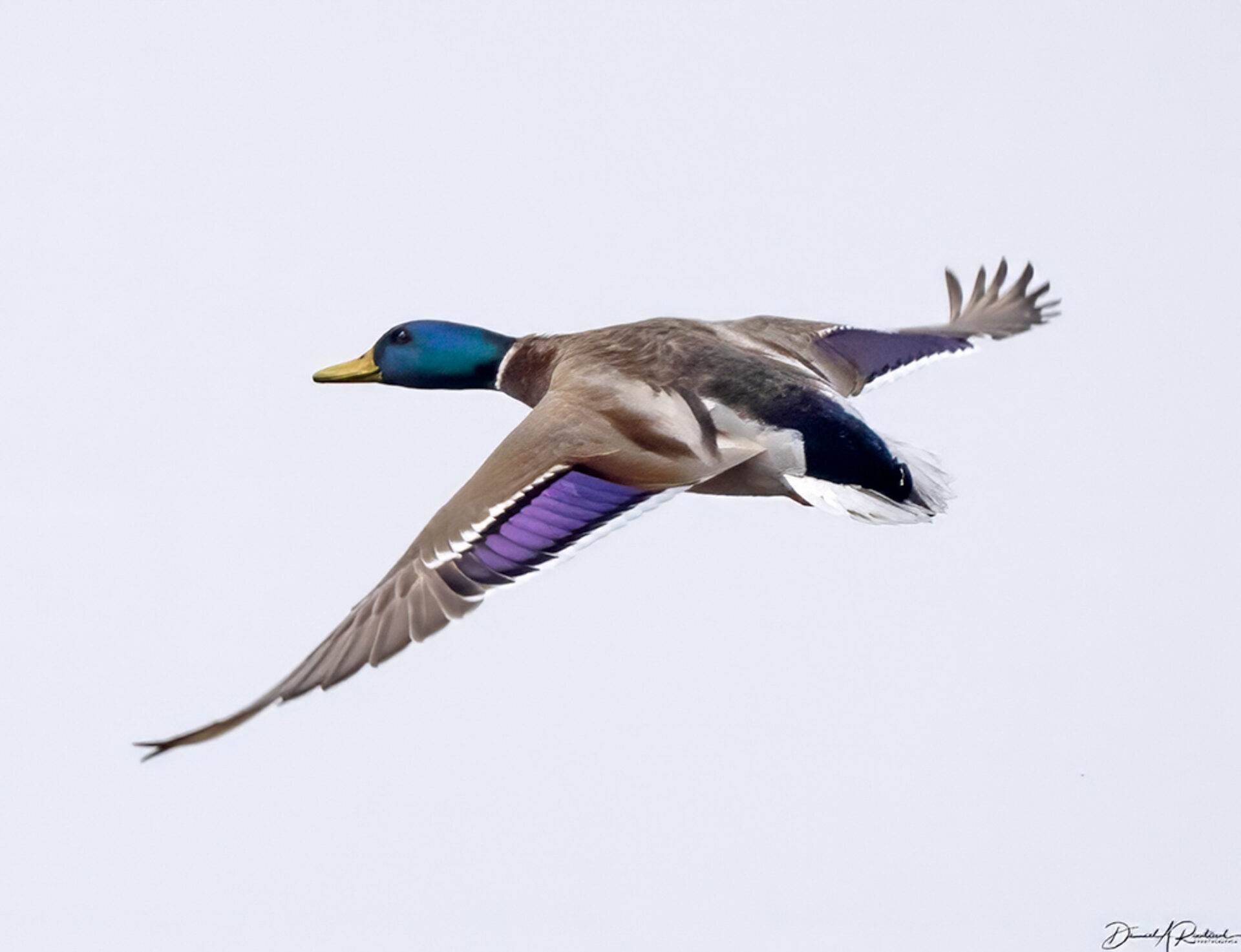
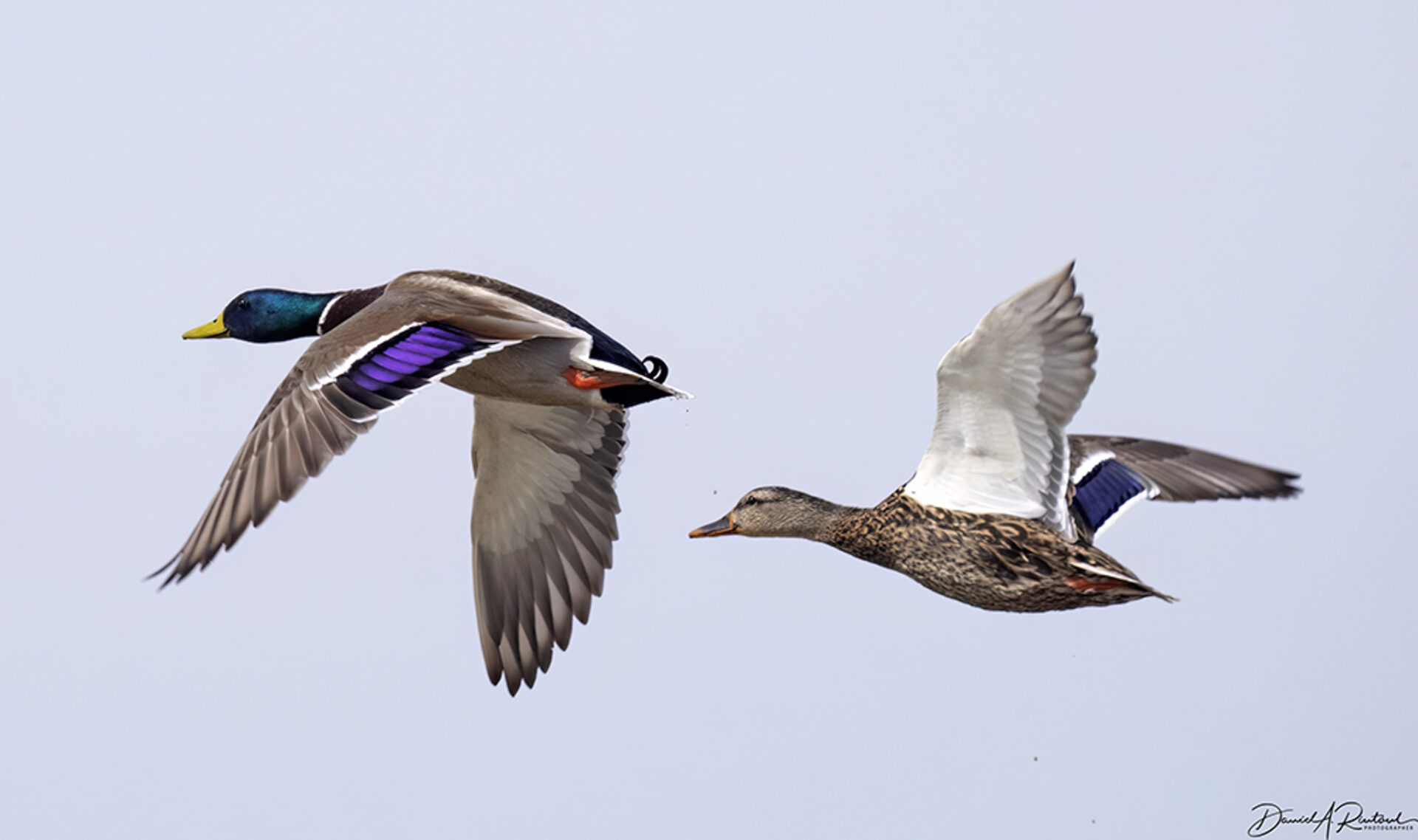
First up is the familiar Mallard (Anas platyrhynchos), the most widely distributed of all the dabbling ducks (ducks which generally don’t dive for their food, and which can take off directly from the water without having to flap and paddle before lifting off). Formerly a species found only in the northern hemisphere, they were (of course) introduced in Anglophone countries by hunting groups known as acclimatization societies. So now they are found in Australia, New Zealand, South Africa and even the Falkland Islands. Known to hunters as “greenheads”, this male shows us how it got that name. Click here for larger image.
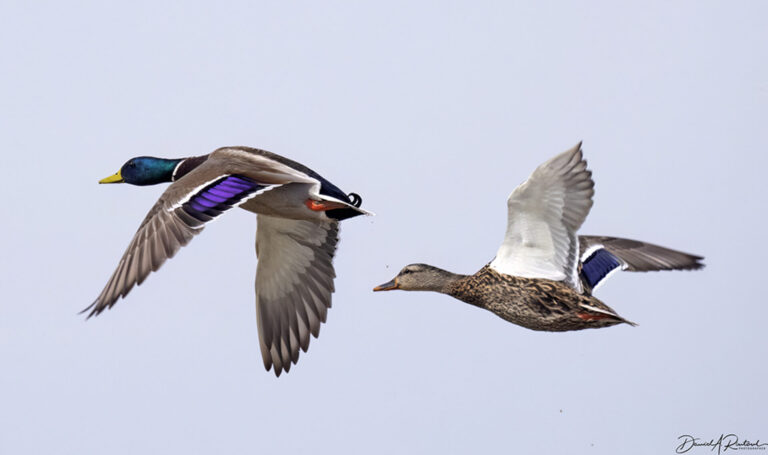
Female Mallards (the trailing spouse in this image) are not as flashy, but that is typical of most ducks. When sitting on eggs all day long it is not advisable (nor evolutionarily advantageous) to be conspicuous. Click here for larger image.
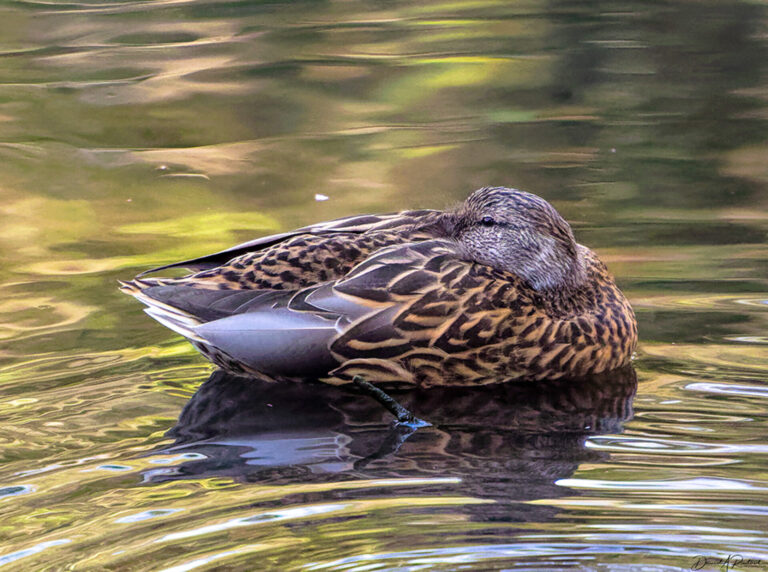
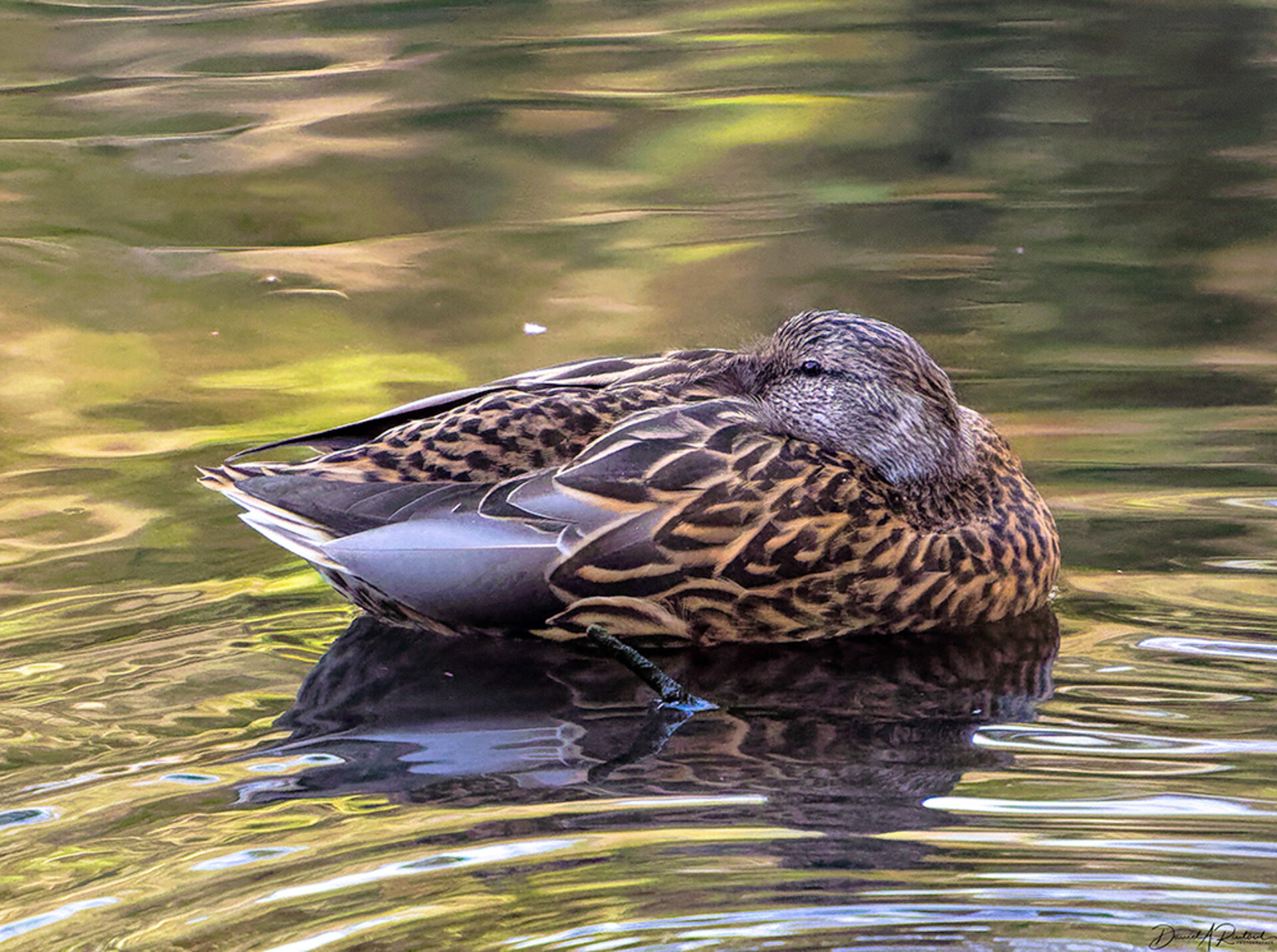
Up close, however, the plumage of the female Mallard is intricate and quite beautiful. Click here for larger image.
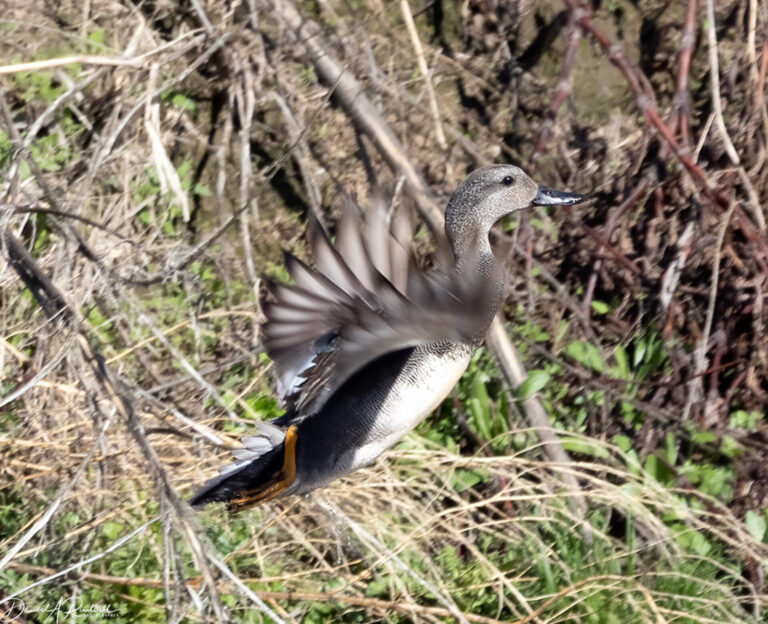
Another common duck in the northern hemisphere, the Gadwall (Mareca strepera) is slightly smaller than the Mallard, but they do share a lots of habits (feeding by dipping the head into water and the butt into the air, quick and vertical takeoff from small bodies of water, etc.) and a lot of habitats. During the 20th century their range expanded substantially in Europe, as well as into parts of North America (Maritime Provinces in Canada, New England in the USA) where they were formerly only found as vagrants. The origin of the common name Gadwall is unclear, but the species name “strepera” means “noisy”, and they certainly are that. Click here for larger image.
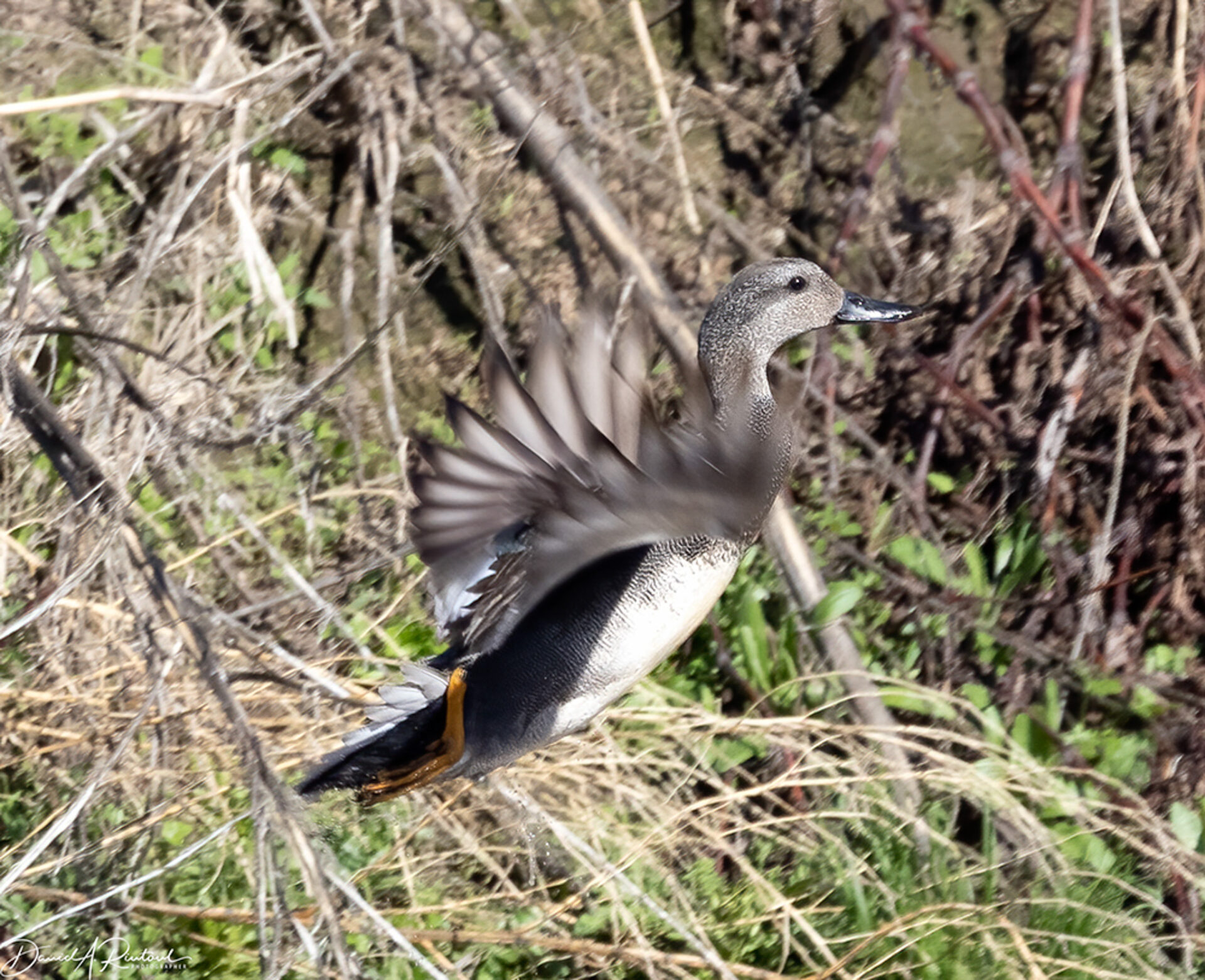
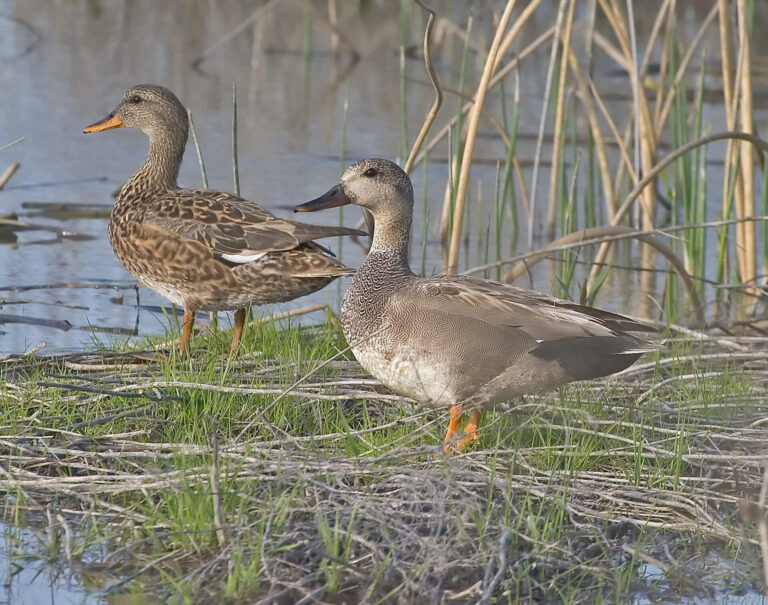
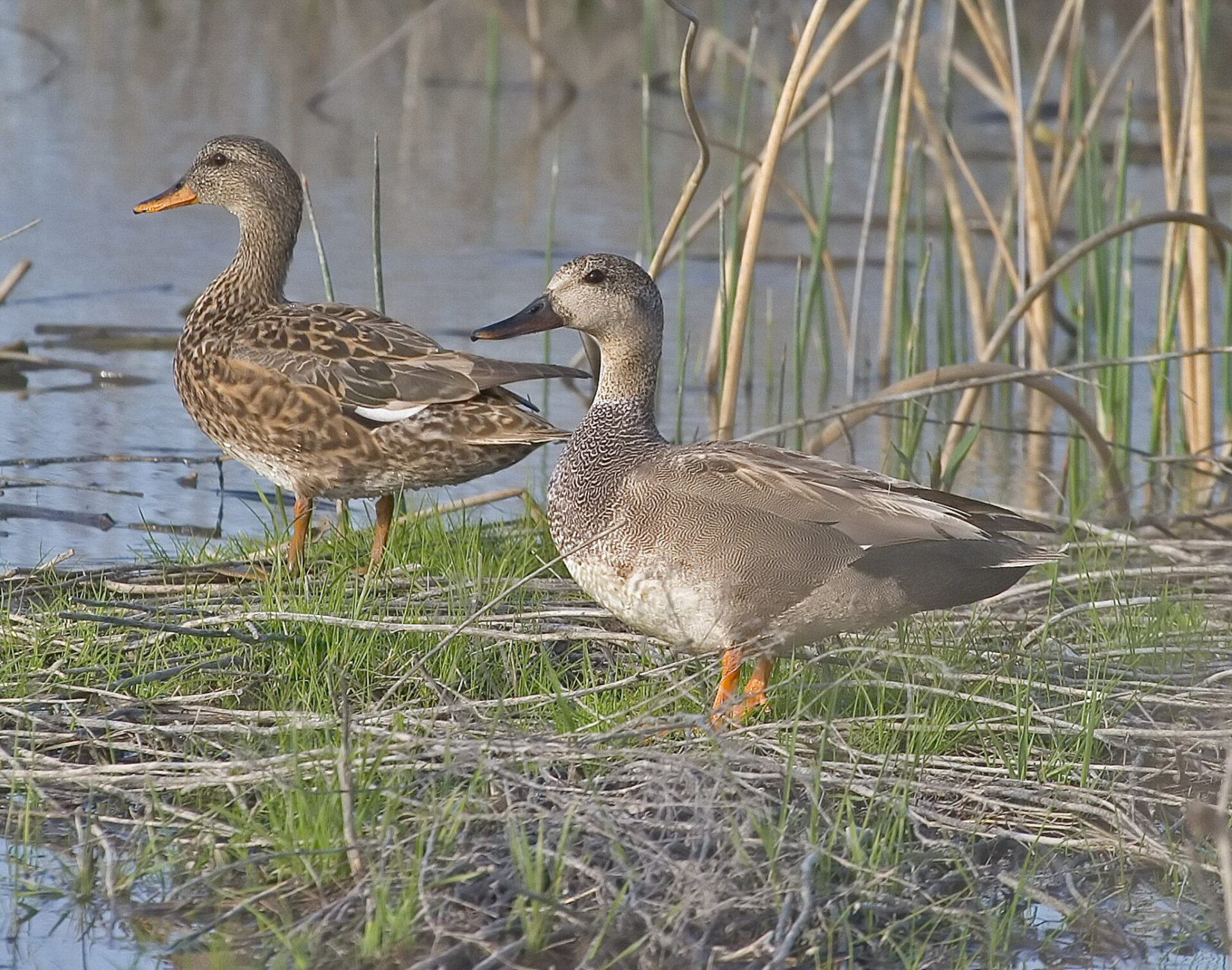
Although the male Gadwall (foreground) is less flashy than the male mallard, the female strongly resembles the female Mallard. The intricate patterning of the plumage on both sexes is quite remarkable if you can get a decent look at it. Click here for larger image.
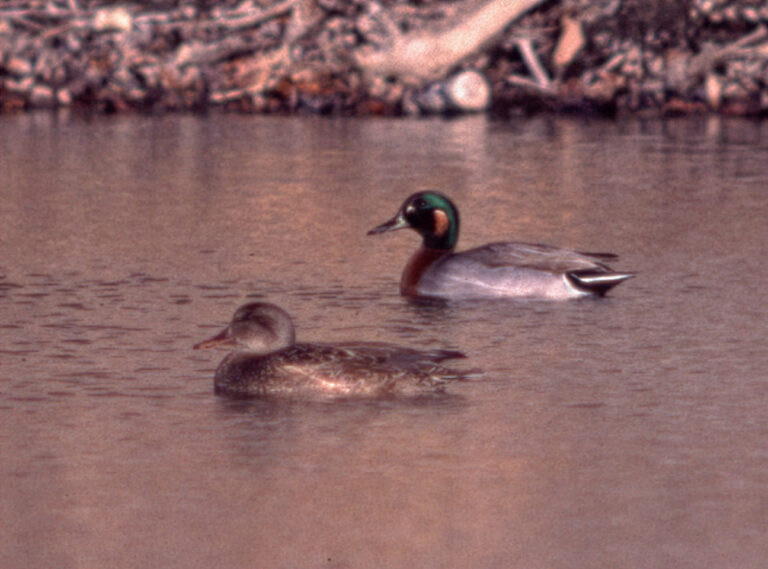
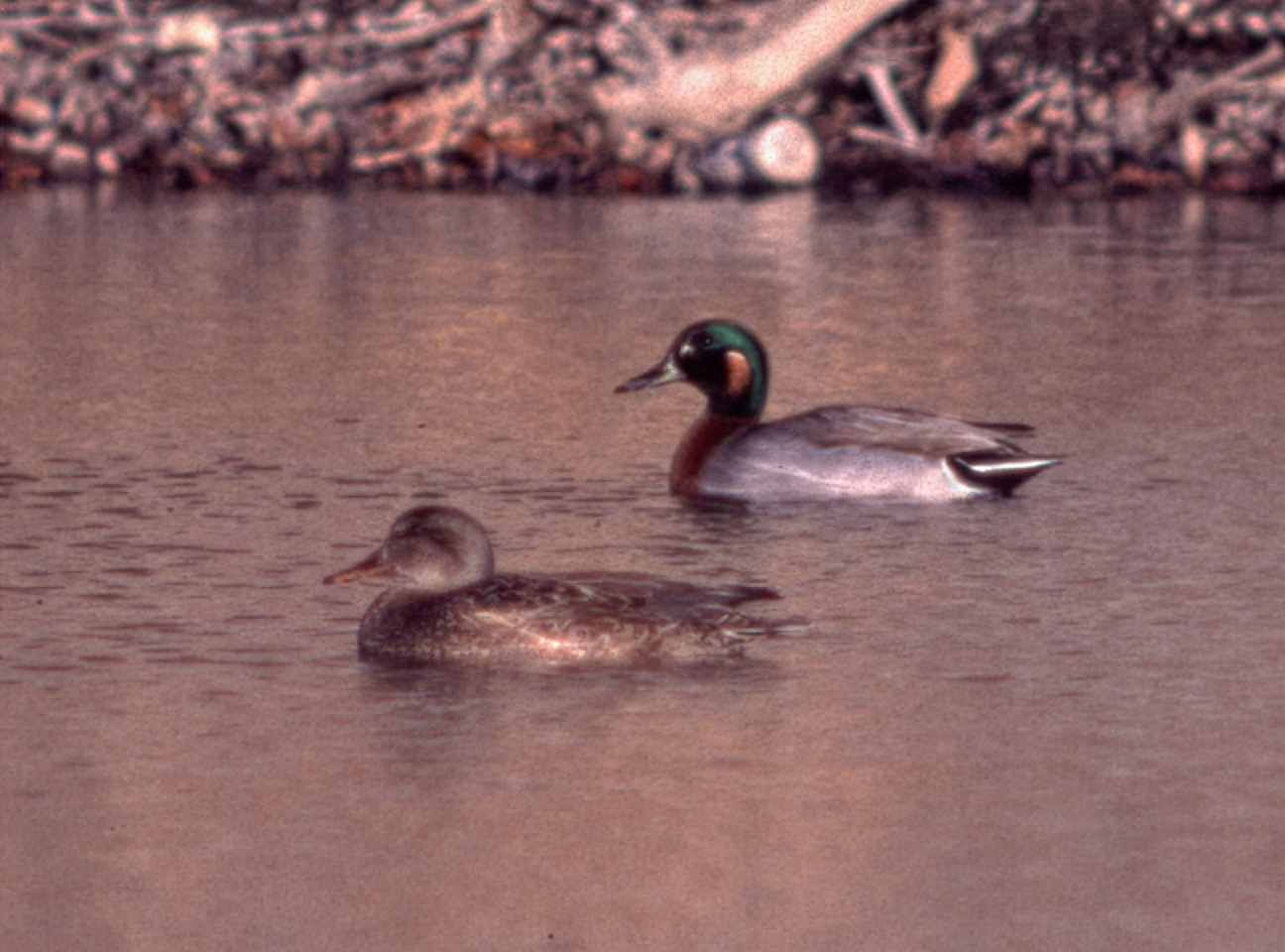
The aforementioned resemblance of female Mallards and Gadwalls might partially explain the existence of the duck at the right in this image, which is a hybrid of the two species (bird at left is a female Gadwall). But Mallard males are among the most aggressive and randy birds on the planet. Hybrid offspring of Mallards have been recorded for 8-10 different species. Some say that the Mallard deserves its name, since it is a combination of “mall” (male) and “ard”, which means the “worst example of” (think drunkard, laggard, dullard, etc.). This hybrid, known today as Brewer’s Duck, was first described by Audubon in 1822, who correctly surmised that it was a hybrid rather than a true species. They are supposed to be one of the more common hybrid ducks, but I’ve only seen two in my lifetime, and was only able to photograph this one from a less-than-optimal distance. Click here for larger image.
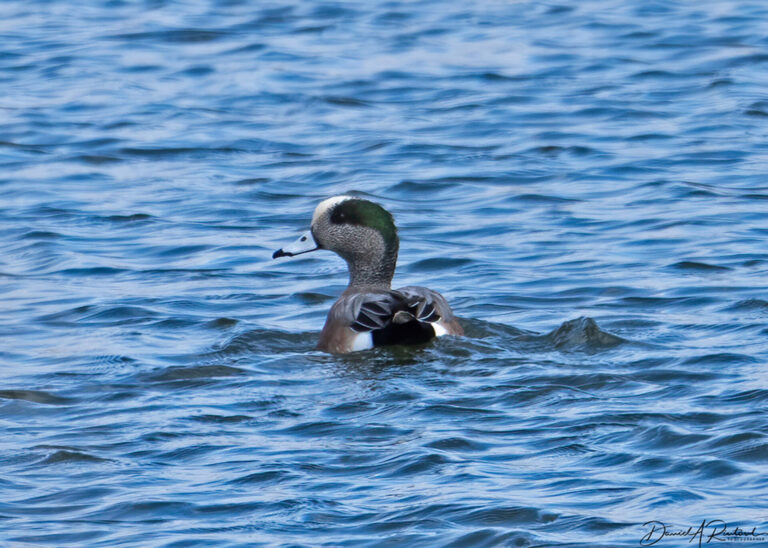
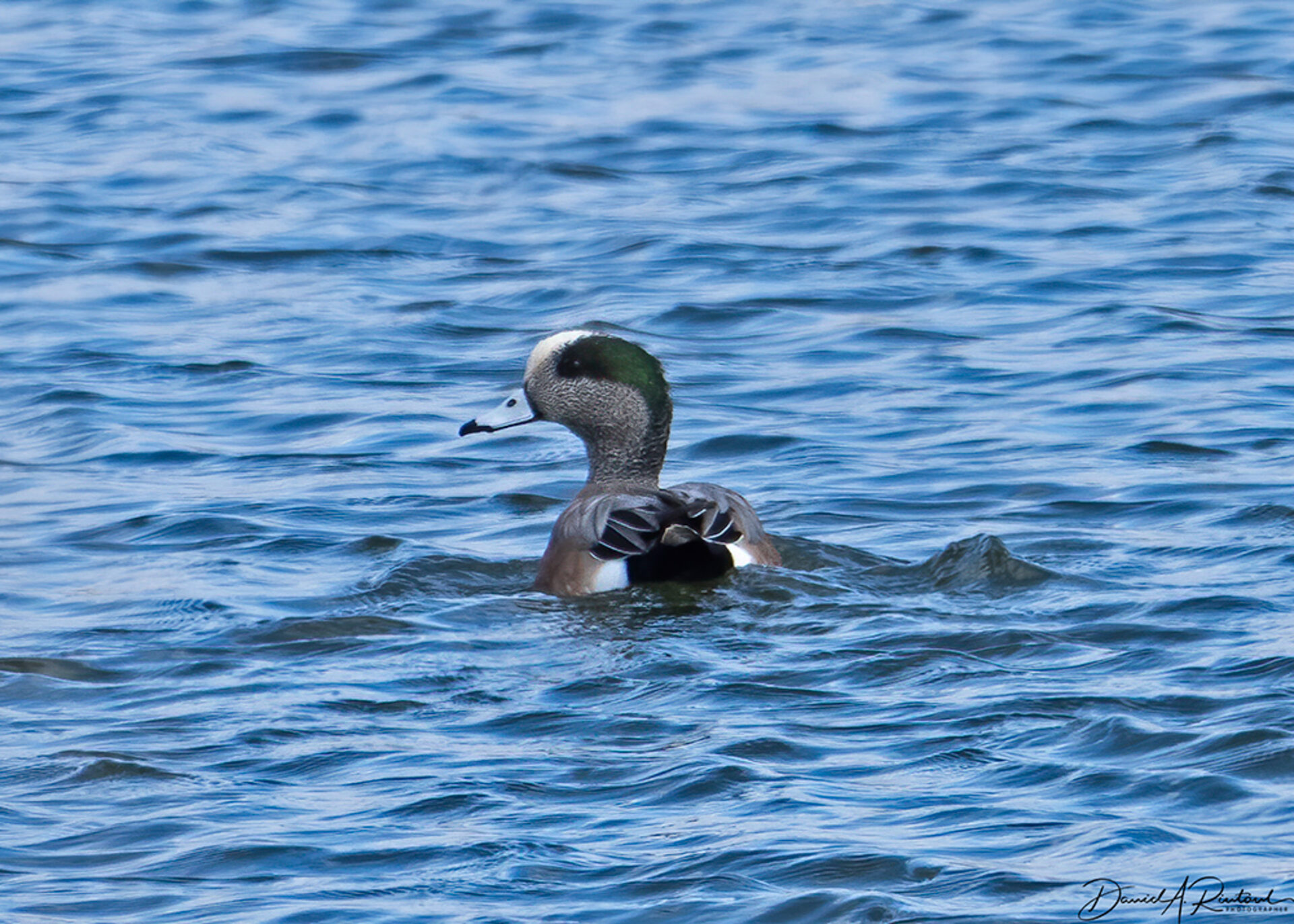
The American Wigeon (Mareca americana), another dabbling duck, is known to hunters as the Baldpate, due to its white forehead. It has an Old World counterpart, the Eurasian Wigeon (M. penelope), with a cream-colored forehead. Both of these breed in the very far north of both North America and Eurasia. It is a much less common bird than are the other dabbling ducks in the previous images, and remains in my list of BVD (Better View Desired) species. Click here for larger image.
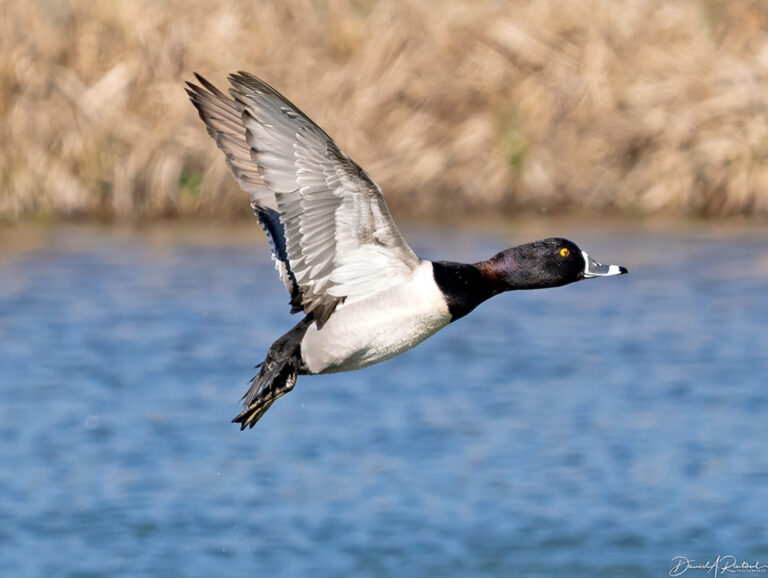
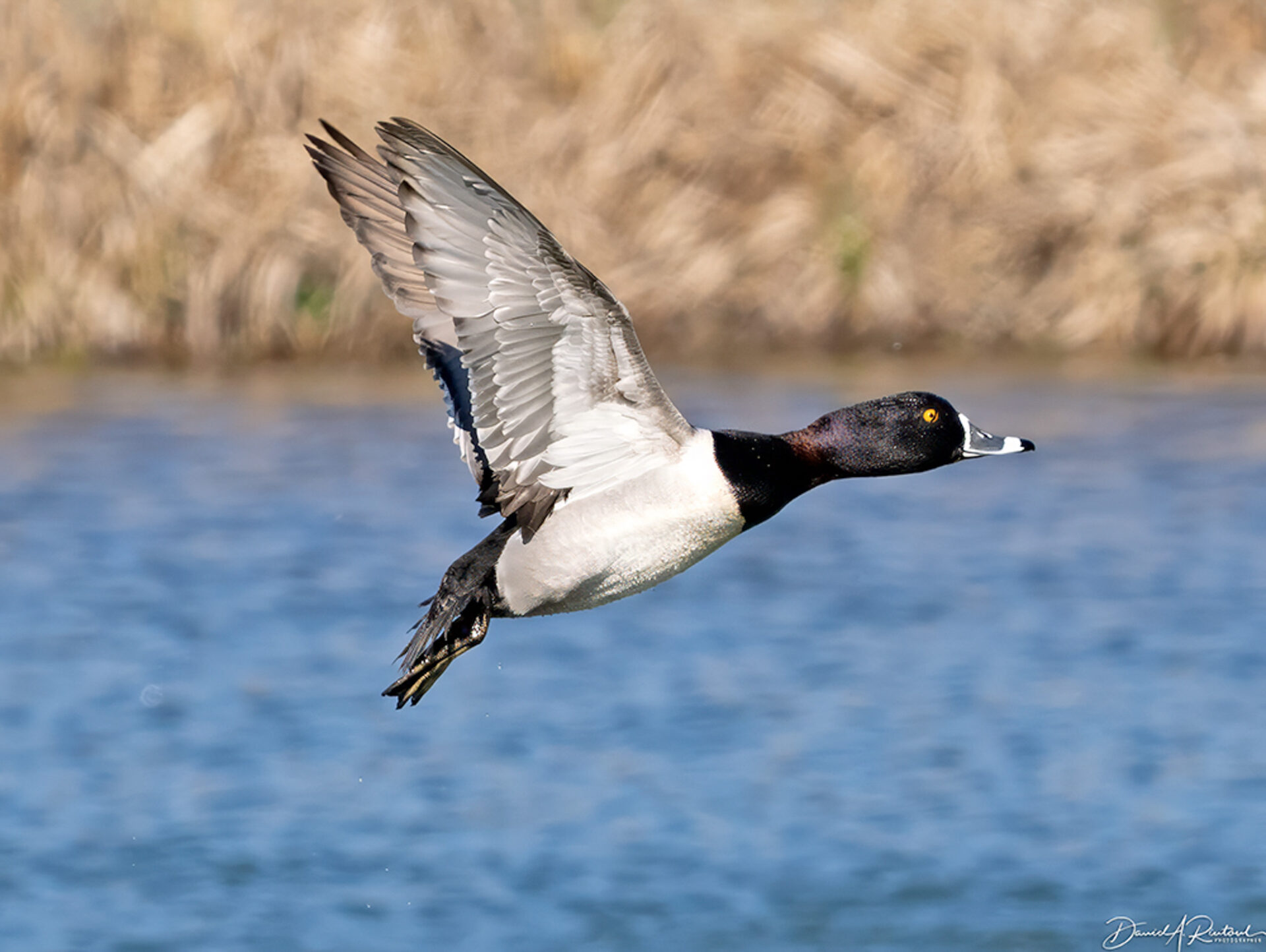
We’ll conclude with a trio of less common ducks (or less commonly photographed by me, if you prefer. This is a Ring-necked Duck (Aythya collaris); it is a diving (rather than dabbling) duck. The common name and the species name both reference a plumage character that is hardly ever observed in the wild, a brown ring or collar around the neck. You can see it in this image if you squint.. Personally, I (and a lot of other birders) would be happy to see the name changed to Ring-billed Duck! Click here for larger image.
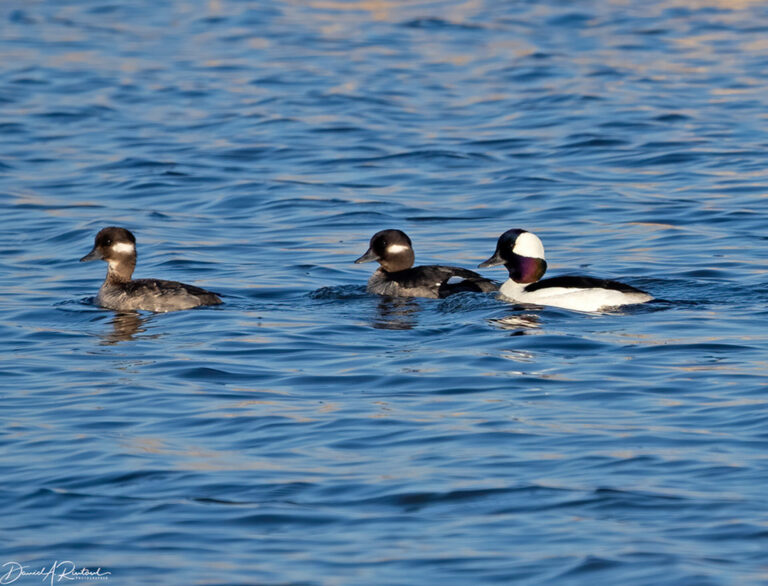
Another handsome diving duck is the Bufflehead (Bucephala albeola), which beginning birders often pronounce to be the “cutest duck ever!” And that might even be true; they are winsome little charmers. They are certainly our smallest diving duck, possibly because they are cavity nesters; tree cavities in the boreal/aspen parkland where they nest can be on the small side. Click here for larger image.
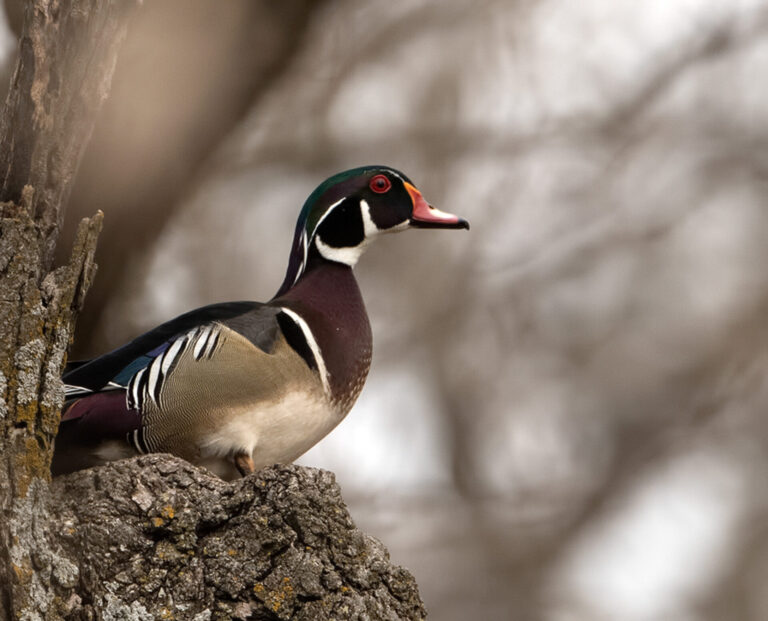
The grand finale of this week’s images is the Wood Duck (Aix sponsa). Another tree-cavity nesting species, this spectacularly colored duck is one of only two species in the genus. The other, an Asian species known as the Mandarin Duck (A. galericulata) is even more spectacular! Mandarin Ducks are commonly kept in zoos and in private collections, and escapees often draw big crowds, much to the dismay of folks who live in the neighborhoods where the escaped duck takes up residence. Click here for larger image.

donatellonerd
Thanks (as usual — my Monday morning treat). the “greenhead’s” head looks very blue to me.
donatellonerd
@donatellonerd: ok, I see green on the hybrid’s head — but still not on the first male mallard.
and I should have said first!
Sure Lurkalot
These are all ducks I see in and around Denver’s creeks, ponds and reservoirs. During Covid, Cherry Creek near my home had a variety of ducks, widgeons, mergansers, shovelers, golden eyes along with the more ubiquitous mallards, but it’s all mallards now.
I’ve only seen one pair of wood ducks so far, at a reservoir not far from the airport.
I love ducks!
Betty Cracker
Great photos as always, thanks!
A small flock of Wood Ducks landed in our lagoon a few years back, and it was such a treat to see them. So impressively colorful! Haven’t seen any at this particular spot since, but I do see them sometimes at random lakes in the region.
Has anyone visited Lake Mývatn in Iceland? I’ve read it is an excellent place to see ducks in the summer, including various widgeons and goldeneyes and also swans.
SteveinPHX
I’ve not seen a Wood Duck in the wild, but the photos always amaze me.
zhena gogolia
Beautiful ducks!
Yesterday we saw a group of cedar waxwings while on our walk. They were so beautiful and playful — I’d never seen one in my life and always wanted to. Such beautiful coloring.
Betty Cracker
@zhena gogolia: That’s fantastic that you got to see some waxwings! There’s something magical about them. The first time I saw them in person was about 10 years ago when a flock landed high up in our bamboos. Their black masks and perky crests make them look impossibly cool.
Just look at that parking lot
Nice post. Thanks.
In South Florida there’s a population of Egyptian Geese( but I’ve read they’re more related to ducks than geese). The golf course( several ponds) by my place, has for the past 10 years or so, has been home to a small population . This year there has been maybe half as many & not sure how many are breeding/nesting since it’s also been very quiet. Egyptian Geese are very territorial and make a can make a big racket. Miss the noise.
Betty Cracker
@Just look at that parking lot: I hope your resident geese show up. I often see Egyptian Geese listed in the Florida rare bird alert email I receive daily from Cornell. Have never seen one in person though. They’re almost always sighted in South Florida, whereas I’m on the Nature Coast. Will have to carve some time out to view them next time I visit friends in S FL.
Albatrossity
@Just look at that parking lot: Egyptian Geese are all over Europe, year-round, and are considered a pest. The EU tagged them as an invasive species. Hope they don’t act like that in the USA, but that is probably a vain hope…
To all jackals, re WaterGirl’s note above: Please do consider submitting a post or two to OTR, it doesn’t take long and is an excellent rainy/snowy day activity that will enrich us all. Yes, the Horrors are consuming us all right now, but that is partly by design. The enshittification of the internet can be combatted by places like BJ, and by folks who send in some pics and words that take us away, even if only for a little while.
You will now be returned to your regular doomscrolling.
Rob
@Albatrossity: Love the ducks this morning, especially the Brewer’s Duck. Also, Ross’s Gull is the March bird on the Flyover Country Calendar. Hopefully one will flyover Maryland and land for a few days!
Winter Wren
Ring necked ducks are common around the Melbourne, FL area right now. I had shared some photos on social media and received exactly that reaction – should be named ring-billed duck!
Winter Wren
@Just look at that parking lot:
We have had them walk through our back yard with their young. Interesting looking birds!
Wapiti
In the winter, Seattle’s Green Lake park has flocks of wigeons. They are wild and quite skittish around people. I once saw a Eurasian Wigeon in a flock of American Wigeons there. Some poor bird took off with the wrong flock and won’t see his fellows until they get back to the Arctic in the summer.
MCat
Thanks. I love ducks!
mvr
Thanks for these! Now I’ll be able to work on extending my duck knowledge beyond Mallard/non-Mallard.
bluefoot
Thanks for these! I remember being delighted at the Audubon field guide description of the bufflehead as “a short pudgy duck.” I lost that field guide a couple decades ago. I wonder if they still have that description.
Mike Mundy
Wood Duck couple.
Albatrossity
@Mike Mundy: Nice!
pat
I guess nobody bothered to look at the Mandarin Duck because no one said WOW!
Mike Mundy
Mandarin Ducks near Karuizawa.
pat
@Mike Mundy:
Nice, but the photo that Albatrossity linked to is much more WOW.
zhena gogolia
@Betty Cracker: Just saw this — yes, the crests, the masks, the way they flip upside down . . . So cool.