
• Menu
  • Skip to primary navigation
  • Skip to main content
  • Skip to primary sidebar

Before Header

  • About Us
  • Lexicon
  • Contact Us
  • Our Store
  • ↑
  • ↓

Balloon Juice

Come for the politics, stay for the snark.

Disagreements are healthy; personal attacks are not.

Imperialist aggressors must be defeated, or the whole world loses.

the 10% who apparently lack object permanence

Let’s delete this post and never speak of this again.

Whoever he was, that guy was nuts.

Damn right I heard that as a threat.

I am pretty sure these ‘journalists’ were not always such a bootlicking sycophants.

DeSantis transforming Florida into 1930s Germany with gators and theme parks.

Narcissists are always shocked to discover other people have agency.

You are either for trump or for democracy. Pick one.

Republican also-rans: four mules fighting over a turnip.

I’m starting to think Jesus may have made a mistake saving people with no questions asked.

I might just take the rest of the day off and do even more nothing than usual.

Innocent people do not delay justice.

“I was told there would be no fact checking.”

Consistently wrong since 2002

The revolution will be supervised.

Usually wrong but never in doubt

Is it negotiation when the other party actually wants to shoot the hostage?

Impressively dumb. Congratulations.

Republicans do not trust women.

This has so much WTF written all over it that it is hard to comprehend.

“But what about the lurkers?”

Some judge needs to shut this circus down soon.

Mobile Menu

  • 2026 Targeted Political Fundraising
  • Donate with Venmo, Zelle & PayPal
  • Site Feedback
  • War in Ukraine
  • Submit Photos to On the Road
  • Politics
  • On The Road
  • Open Threads
  • Topics
  • Authors
  • About Us
  • Contact Us
  • Lexicon
  • Our Store
  • Politics
  • Open Threads
  • 2026 Activism
  • Garden Chats
  • On The Road
  • Targeted Fundraising!
You are here: Home / Archives for Books / Recommended Reading

Recommended Reading

More Reading as Resistance

by Tom Levenson|  January 26, 20269:00 pm| 17 Comments

This post is in: Open Threads, Recommended Reading

NB: Another cross post with Inverse Square. My goal is to have a regular (hopefully weekly, hopefully up on Sunday) post that emerges somehow from some reading that cuts in one way or another. I’ll put that up here as well until/unless I get hooted out of the arena. You have the power!

—————————–

Apologies for the day-late/dollar-short appearance of this one. As many of you were likely doing, I spent yesterday in something of a fog of rage and sorrow over what happened in Minnesota: the murder under color of law of Alex Pretti—followed by the even more enraging lies the administration immediately spewed to pretend we hadn’t all seen an extrajudicial murder happen before our eyes.

I deeply believe, though, that it is in exactly such moments that reading can be an essential and significant element of resistance.

I didn’t have the will to read with feeling or with depth this weekend—and the week before it was filled with the usual stuff of ordinary life, so I can’t say the art of words rung its changes in me then, either.

But I found myself today, despite a dive back into the ordinary and unavoidable cruft of the day job, needing some help, some language with which to respond to tragedy.


Auto Draft 156

So I spent an hour with the World War I poets, returning to some old chestnuts, and reading some I hadn’t (or hadn’t remembered) encountering before.

Here’s one that brought me up short. Kinder on the surface than much of the catalogue, but not so much, I find, on rereading. There’s a sting there, and purpose.

Enough prologue. I share with you…


The Dead

BY RUPERT BROOKE

These hearts were woven of human joys and cares,

Washed marvellously with sorrow, swift to mirth.

The years had given them kindness. Dawn was theirs,

And sunset, and the colours of the earth.

These had seen movement, and heard music; known

Slumber and waking; loved; gone proudly friended;

Felt the quick stir of wonder; sat alone;

Touched flowers and furs and cheeks. All this is ended.

There are waters blown by changing winds to laughter

And lit by the rich skies, all day. And after,

Frost, with a gesture, stays the waves that dance

And wandering loveliness. He leaves a white

Unbroken glory, a gathered radiance,

A width, a shining peace, under the night.


Take care of yourselves, everyone. And each other.

Also too–this is an open thread, but consider telling us about what you read to console, or stiffen up the sinews, or to instruct on what it is that must be done–or any other purpose that scratches an itch, now or whenever.

Image: Berthe Morisot, Reading (portrait of Edma Morisot), 1873
 

More Reading as ResistancePost + Comments (17)

Sci-fi/Fantasy Book Club, Anyone? (Open Thread)

by Major Major Major Major|  February 27, 20242:31 pm| 68 Comments

This post is in: Books, Open Threads, Recommended Reading

Hey all! Some friends and I have been organizing a book club over on Bluesky, and I thought it would be fun to invite the folks here who want to join, and maybe do a parallel one here, if there’s enough interest. Our previous selections were Neuromancer and A Wizard of Earthsea; this time we’re going for something more modern. We’re picking the book with a bracket, and the voting is happening over there, so if you want a say, please participate! The brackets are vaguely based on subgenre/vibe. Here are the selections:

The polls to vote in are linked below that post, starting here. There are a lot of good options, and a lot that I haven’t read, so I’m hoping one of those wins. Or at least that Foundryside loses because I do not want to read that again. I think that you should be able to vote once without a Bluesky account, but I’m not 100% on that.

And with that out of the way, this can be an open thread. One possible topic: read any good books lately? I’m reading Authority by Jeff VanderMeer, the sequel to Annihilation, which was incredible. It’s… fine so far. Much more normal. I think I’d be enjoying it more if not for the comparison. Next I’ll be rereading Alfred Bester’s The Stars My Destination, in the original American serialization–my dad got me the 1956-57 back issues of Galaxy for Christmas.

Sci-fi/Fantasy Book Club, Anyone? (Open Thread)Post + Comments (68)

What The Kids Are Reading

by Major Major Major Major|  January 14, 20235:00 pm| 105 Comments

This post is in: Books, Gamer Dork, Open Threads, Popular Culture, Recommended Reading

‘Tis the season for retrospectives. Since I don’t read or watch that much stuff the year it comes out, my annual lists are always about what I consumed during the previous year, regardless of when it was made. Last year I wrote about John le Carré’s A Perfect Spy. This year I have a little more to say. I’ll write my Best Books post later (Le Guin, Adrian Tchaikovsky, and Gene Wolfe, this time around); right now I want to talk about the other books.

In 2022, I tried to catch up on some popular contemporary fantasy, and I was sorely disappointed. I hope I simply ran into Sturgeon’s Law—ninety percent of everything is crap–but I suspect I was also dipping into some pretty craptastic wells. Recent trends are… not promising. I took a number of recommendations from the r/fantasy subreddit. It’s Reddit, so a lot of the users either are or act like fourteen-year-olds, but I wanted to see what the youths were up to. It turns out they’re up to two things: loving Brandon Sanderson, and reading self-published anime clones.

Sanderson is fine. I like the writing podcast he spent many years contributing to. His books are, whatever, not to my taste, but I get it. Characters a bit shallow, plots a bit paint-by-numbers, narration a bit overlong on exposition, everything rather unsexy (befitting his devout Mormonism), but he builds great worlds, and is loved in particular for his intricate magic systems. He is one of the best-selling fantasy authors of the modern era. He’s also insanely prolific–during the pandemic he woke up one morning and found he’d accidentally written four extra novels. Good for him! But his success has led publishers to release a lot of high-concept mimicry–it’s like Brandon Sanderson but xyz–which, unsurprisingly, is not to my taste.

I was especially disappointed with Foundryside by Robert Jackson Bennett. I’d seen its (excellent) cover on shelves for a few years and finally decided to read it. I was sort of excited. I adore Bennett’s City of Stairs, which I’d recommend if you’re in the mood for a good diplomatic spy thriller. But–nope. This book was not for me. The huge Brandon Sanderson blurb on the jacket should have been hint enough. Intricate magic system? Check. Decent action? Check. Bloodless romance… check… twisty-yet-predictable plot… you guessed it. Check.

On to the next trend: self-published anime clones. Let me begin by saying that I am not trying to crap on self-published authors, who have written some excellent books and who we have a number of among our readership. No, this is about a narrow slice of contemporary fantasy, largely written by people who got their start with fanfiction. And it’s an interesting phenomenon.

show full post on front page

There are two major subgenres here, isekai and LitRPG, which are not entirely new ideas, though in this context they share an important attribute: they are not, at a fundamental level, inspired by books, but rather by anime and video games. Add in the tendency for these authors to not use developmental editors, and you get some unusual (or all-too-typical) stories. One fun thing about them is the palpable, insane enthusiasm level of the authors–they love writing these things, and it shows. That’s great! A lot of trad-pub authors don’t manage this. But they can also get swept away by their own, ah, brilliance. Less great. Ultimately, though, what I take issue with is the lack of… I hesitate to say literary merit, barf… let’s just talk about the specific subgenres.

Isekai. Portal fantasy. Not a new idea. A person is displaced from their reality–usually our own–and ends up in a fantasy or science-fiction land. But these particular books are inspired by anime, usually episodic anime, and often originally written as web serials. This works well enough with an episodic structure, if you’re into that, but collected into a ‘novel’, it… does not. Especially when authors don’t try to fix the pacing and arc issues when it’s time to bundle it up for Kindle Direct. The novel is a form, with conventions and expectations, and these often just don’t engage with that.

Don’t get me wrong, I like a good serial. I’ve been reading Pale this year, a dark urban fantasy story inspired by “magical girl” shōjo anime (e.g. Sailor Moon; Puella Magi Madoka Magica). I’ll pick it up before bed sometimes. But it’s long, and it’s a serial, and it can be a grind, just a constant, episodic ratchet. I wish it felt like a series of novels, but it doesn’t. It feels like a series of cliffhangers. Still, I want to see how it ends.

LitRPG shares many of these flaws. These are stories like Ready Player One and Sword Art Online–a character is in a video game, engages with video game dynamics, gains power in video game ways, does video game stuff. Needless to say there is a lot of Japanese material inspiring these works. Video games usually take the form of episodic loops, so it’s no surprise to find that structure here. There’s a power progression, at least, which shares a lot with traditional hero’s journey stories, but these are mostly still serials with a fanfiction vibe. They also often feel like adolescent male power fantasies, which is hardly new in fantasy, but at a certain point, to quote Stephen King, everything starts to taste like beans.

So yeah. That’s what the kids are up to, I guess. I think I’ll go back to being an old fart who reads classics that have withstood the test of time, and leave the anime and video game stories for when I watch anime and play video games.

They say to end blog posts with a prompt, so: what disappointed you last year? Haha.

What The Kids Are ReadingPost + Comments (105)

MLK: from Dreaming to Reality

by MisterDancer|  January 17, 20222:00 pm| 45 Comments

This post is in: Black Lives Matter, Black Votes Matter, Open Threads, Racial Justice, Recommended Reading, Taking Action to Defend Democracy, This Week In Blackness, Your Place Is In The Resistance, Cosplay Socialists, Don't Know Much About History, It's Not Too Late, Our Failed Media Experiment, Our Failed Political Establishment, Stuff About Black People Written By a Black Person, There can be no unity without accountability.

Among the most painful bits of Dr. King’s legacy is how so much of it’s reduced to “I Have a Dream.” It’s true that it’s a landmark speech, powerful and moving…

…and always heard out of context of the other, more direct speeches that graced the March on Washington (a March organized by an openly Gay Man, no less – go look up the badass Bayard Rustin, please and thank you!). As if  the marchers just wanted to spend all day on their feet, listening to platitudes and winsome ideas!

I’m not going to dive into that context, I assume your Google button ain’t broke. :) What I will do, is talk about a couple of other works by Dr. King, works that ground him in the realities he fought to overcome, and that echo into these times.

The text for the afternoon will be taken from two works from near Dr. King’s passing:

  • “The Drum Major Instinct,” (hereafter DRUM), which you can listen to here, and read here, and
  • “A New Sense of Direction,” (hereafter SENSE), which you can read here.

I post all this to encourage you to read/listen to the above in full. To underline that Dr. King was far richer a thinker and even rabble-rouser than gets noticed — that the Hoover FBI feared him for damned good reasons. If you chose to read the above docs, and skip the rest of this? HELL YA!

But for those who want more? Follow…

See, Dr. King did not buy into a color-blind society. That wasn’t the context he gave his “Dream” speech under. The context, the fuller context of his work and life’s mission, is made plain by this remarkable passage in DRUM:


[…]when those brothers told me what they were earning, I said, “Now, you know what? You ought to be marching with us. [laughter] You’re just as poor as Negroes.”

And I said, “You are put in the position of supporting your oppressor, because through prejudice and blindness, you fail to see that the same forces that oppress Negroes in American society oppress poor white people. (Yes) And all you are living on is the satisfaction of your skin being white, and the drum major instinct of thinking that you are somebody big because you are white.

And you’re so poor you can’t send your children to school. You ought to be out here marching with every one of us every time we have a march.”

Now that’s a fact. That the poor white has been put into this position, where through blindness and prejudice, (Make it plain) he is forced to support his oppressors. And the only thing he has going for him is the false feeling that he’s superior because his skin is white—and can’t hardly eat and make his ends meet week in and week out.

And there’s so much more.

show full post on front page

One of the positive parts of Dr. King’s approach was in seeing a bigger picture, was in tying together all manner of injustice into a massive framework, what we today would call an attempt at intersectionality. It’s far from perfect; we know he was far too casual about martial relations to see the fullness of sexism. And although he was surprisingly cool with Rustin, he also failed to be vocal at all about what we’d today call LBGTQIA+ issues.

Yet there was a seed of power in his approach to directing white people to look inside themselves, in his challenge to their (and society’s) assumption of inherent goodness. And as critical as he was towards poor whites, that sympathy evaporates completely when you consider his words towards what we, today, might see as Privileged White people. From SENSE:

[…]policy-makers of the white society have caused the darkness. It was they who created the frustrating slums. They perpetuate unemployment and poverty and oppression. Perhaps it is incontestable and deplorable that Negroes have committed crimes, but these are essentially derivative crimes. They are born of the greater crimes of the white society.

King is far more aggressive – even angry — about calling out white society than he’s usually portrayed as. Reading his dissections of that systemic failure, and ideas on overcoming it, are bracing to this day…sadly.

See, King’s quick to lay the political blame on what I contend are still surpassing the Black and Brown voice in politics:

Negroes became outraged by blatant inequality. Their ultimate goal was total, unqualified freedom. The majority of the white progressives were outraged by the brutality displayed. Their goal was improvement or limited progression.

Obtaining the right to use public facilities, register and vote, token educational advancement, brought to the Negro a sense of achievement; he felt the momentum. But it brought to the whites a sense of completion. When Negroes assertively moved on to ascend the second rung of the ladder, a firm resistance from the white community became manifest.[….] Everyone underestimated the amount of rage Negroes were suppressing and the amount of bigotry the white majority was disguising.

(Not everyone. Ask Malcolm X, or Rev. Shuttlesworth, and you’d get a different answer on this, to name two people right off.)

But Dr. King is hella on the right track. And he knows it. And we’re still talking about the impact white progressives have on the Black and Brown vote, to this very day.

And because he’s on the right track, I can say this: Dr. King is clear that some changes can’t be made by speaking too kindly. That some painful truths have to come to the fore.

That’s what Black Lives Matter did. That’s what the 1619 Project did. That’s (part of) why Critical Race Theory – an academic theory mostly for lawyers – had to be scapegoated.

Dr. King saw that the closer we get to reality, the harsher the blow back. The more we talk about the systemic issues in this country, the more the arc of justice pushes the many folx who’ve suffered under those issues into the light and air we all deserve…and the more the old guard will press and preen and pervert and backstab to maintain power.

And SENSE touches on what kind of people have, and can, overcome those barriers:

[…]there are millions who have risen morally above prevailing prejudices. They are willing to share power and to accept structural alterations of society, even at the cost of traditional privilege.[…]Their support serves not only to enhance our power, but their break from the attitudes of the larger society splits and weakens our opposition.

It’s…not an easy calling, that Higher Calling, y’all. If you say it is, if you think I overstate things, then I ask you to show your work.

To conclude: I submit there are some things we can all learn from studying even a bit of Dr. King. And I hope the above serves as a starter, to that on your part, today.

MLK: from Dreaming to RealityPost + Comments (45)

Recommended Reading: ‘Love Is Whatever You Can Still Betray’

by Major Major Major Major|  January 3, 20223:55 pm| 118 Comments

This post is in: Books, Recommended Reading

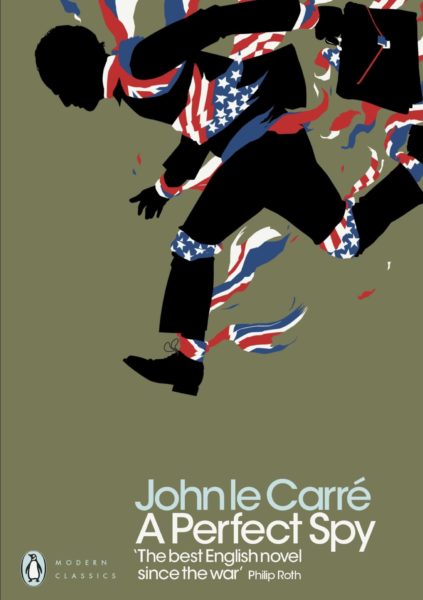
The Perfect Spy ThrillerLooking back on the books I read in 2021, one stands out as the best: John le Carré’s A Perfect Spy. It is a cold-war thriller and thinly-veiled autobiography that follows a spy named Magnus Pym. Its disjointed narrative explores his life from early childhood to the novel’s present-narrated 1986. Like le Carré, Pym is raised by a widower conman, abused at boarding school, and put to work as a spy against enemies both foreign and domestic. Unlike le Carré, Pym never quite learns which way is up; he’s had to wear too many faces, for too long. When the book begins, and Pym vanishes, it is less of a shock to everybody than it ought to be. As the story proceeds, we learn why.
I don’t want to spoil too much, although you can guess the broad contours just by looking at the cover (and what a cover Penguin has chosen!). It’s less about the story than the main character anyway, and his relationship with his father. An early quote, written by Pym about himself, sums it up better than I ever could:

So there’s yet another Pym for you, Jack, and you had better add him to my file even if he is neither admirable nor, I suspect, comprehensible to you[…]. He’s the Pym who can’t rest till he’s touched the love in people, then can’t rest till he’s hacked his way out of it, the more drastically the better. The Pym who does nothing cynically, nothing without conviction. Who sets events in motion in order to become their victim, which he calls decision, and ties himself into pointless relationships, which he calls loyalty. Then waits for the next event to get him out of the last one, which he calls destiny.

A Perfect Spy is a story about a man who’s only ever wanted genuine companionship, and about how the whole world, himself included, constantly conspires to keep it from him. It is about what happens when you break a man who was never quite whole to begin with. Along the way, there are some pretty good adventures, but for the most part it’s as gloomy as the weather in the English seaside town where Pym writes his memoir. This mood isn’t always my cup of tea, but when it works, it works. Apparently it’s considered le Carré’s masterpiece; it’s not hard to see why.

Like many things, this book reminds me of a Mountain Goats song, in particular a line near the end of this one: When you punish a person for dreaming his dream, don’t expect him to thank or forgive you.

What were the best books you read in 2021?

Recommended Reading: ‘Love Is Whatever You Can Still Betray’Post + Comments (118)

In Defense of Whimsy

by Major Major Major Major|  June 2, 20212:39 pm| 206 Comments

This post is in: Recommended Reading, TV & Movies, Culture as a Hedge Against This Soul-Sucking Political Miasma We're Living In

Sci-fi/fantasy author Charlie Jane Anders has a column in today’s WaPo that really resonates with me: Grown-ups, it’s okay to love pop culture for kids. Stop being embarrassed about it. Its thesis: the fans of children’s properties have aged, and, wanting to continue enjoying their favorite characters, have dragged the properties along with them. While this has produced some good works, it has also seen the removal of a vital sense of whimsy and, well, cartoonishness. You may have noticed that we’re now drowning in dark, gritty, sexy takes on everything from Transformers to Batman to Cruella de Vil (who even has a tragic backstory now–it’s been requested that I say this is a spoiler, so learn about this ridiculous idiocy at your own risk).

This has overtaken pop culture to the degree that it extends to non-children’s works that were quite dark and gritty enough already. I’m particularly disheartened-in-advance by the new Dune movie, which appears to be tragically dichromatic and same-y. This is a story written by a man who was tripping his face off half the time, which shows and deserves to shine through; it inspired a whole generation of counterculturistas–so why does it look and sound like it was directed by Christopher Nolan?

What happened to us?

We never wondered why Peter Parker, in addition to his radioactive spider-bite, was capable of inventing miraculous technology like his web-shooters. Or why Batman chooses to throw bat-shaped boomerangs called “batarangs.” We didn’t ask how, exactly, a group of mutated turtles managed to learn martial arts from a sewer rat.

These stories never worried about being taken seriously, or about being “realistic.” That freedom allowed them to take truly beautiful detours, and to defy expectations. To read Golden Age and Silver Age comics, or to watch the original “Star Wars,” is to be intoxicated by a draught of pure imagination, and to feel as though wonders are possible.

Good can defeat evil (and we can cleanly separate one from the other), miracles are commonplace, and lessons are everywhere. A great children’s story has a set of rules that you have to follow — and a sense of gleeful anarchy. Weapons don’t draw blood. Friends and family always come back together.

When adults claim dominion over these stories, they get darker, at the expense some of their innocent fun. Primary colors dim to crepuscular shades, and sexual assault, mutilation and torture become commonplace tropes. Superman once had a pet super-monkey named Beppo who’d stowed away aboard Kal-El’s rocket when he was a baby. In 2016’s “Batman v. Superman: Dawn of Justice,” Kal-El was beaten to death in a gory fistfight with a bone-knuckled zombie alien.

Her op-ed is not, however, a cranky lamentation. There is nothing intrinsically wrong with a dark, gritty superhero movie. The problem is that they are eating up all the big-money resources. It has led to a self-reinforcing stagnation in the industry. From a thread about her piece:

In the article I talk about the rise of the direct market for comics, and the “four quadrant” movie for teens and adults. A lot of structural changes happened starting roughly 40 years ago that helped push formerly kid-focused properties to lose their innocence.

— Charlie Jane “VICTORIES GREATER THAN DEATH” Anders (@charliejane) June 2, 2021

So what’s to be done? Nothing, she argues, that we aren’t already doing, at least as an industry. While the biggest studios may be stuck in a rut, young upstarts like Netflix are investing heavily in fantastical children’s properties. This will help ensure that children have stories to inspire them, just like aging nerds used to, before we collectively decided that whimsy is cringe.

This brings us to what truly troubles me: I feel like it reflects a broader cultural shift away from the fantastical, the non-tragic romantic, the optimistic, the whimsical. We live in a pessimistic era, even as, for most of us, there has never been a better time to be alive. We live longer, we have magic-grade technology, and while we face our share of challenges, humanity always has. But saying this out loud isn’t very hip.

I read a lot and watch a lot of TV. By far the finest piece of fiction I’ve encountered since COVID began is Avatar: The Last Airbender, which I watched for the first time when Netflix picked up the license. For those who don’t know, it’s a children’s cartoon. And it’s got the best storytelling I’ve seen for over a year. The kids, I’m told, will be all right; it’s the adults I’m worried about.

It occurs to me, now that I’ve hit publish, that this is a malaise mostly felt in the US. This might explain the ever-rising Western popularity of anime, a famously romantic art form.

(If you like Avatar, by the way, the head writer has a new original Netflix series, The Dragon Prince, which is also fantastic and fantastical.)

In Defense of WhimsyPost + Comments (206)

Recommended Reading: Some Cosmic Perspective

by Major Major Major Major|  March 8, 20212:10 pm| 136 Comments

This post is in: Books, Recommended Reading, Science & Technology

Some say the world will end in fire,
Some say in ice.
From what I’ve tasted of desire
I hold with those who favor fire.
But if it had to perish twice,
I think I know enough of hate
To say that for destruction ice
Is also great
And would suffice.

– Robert Frost

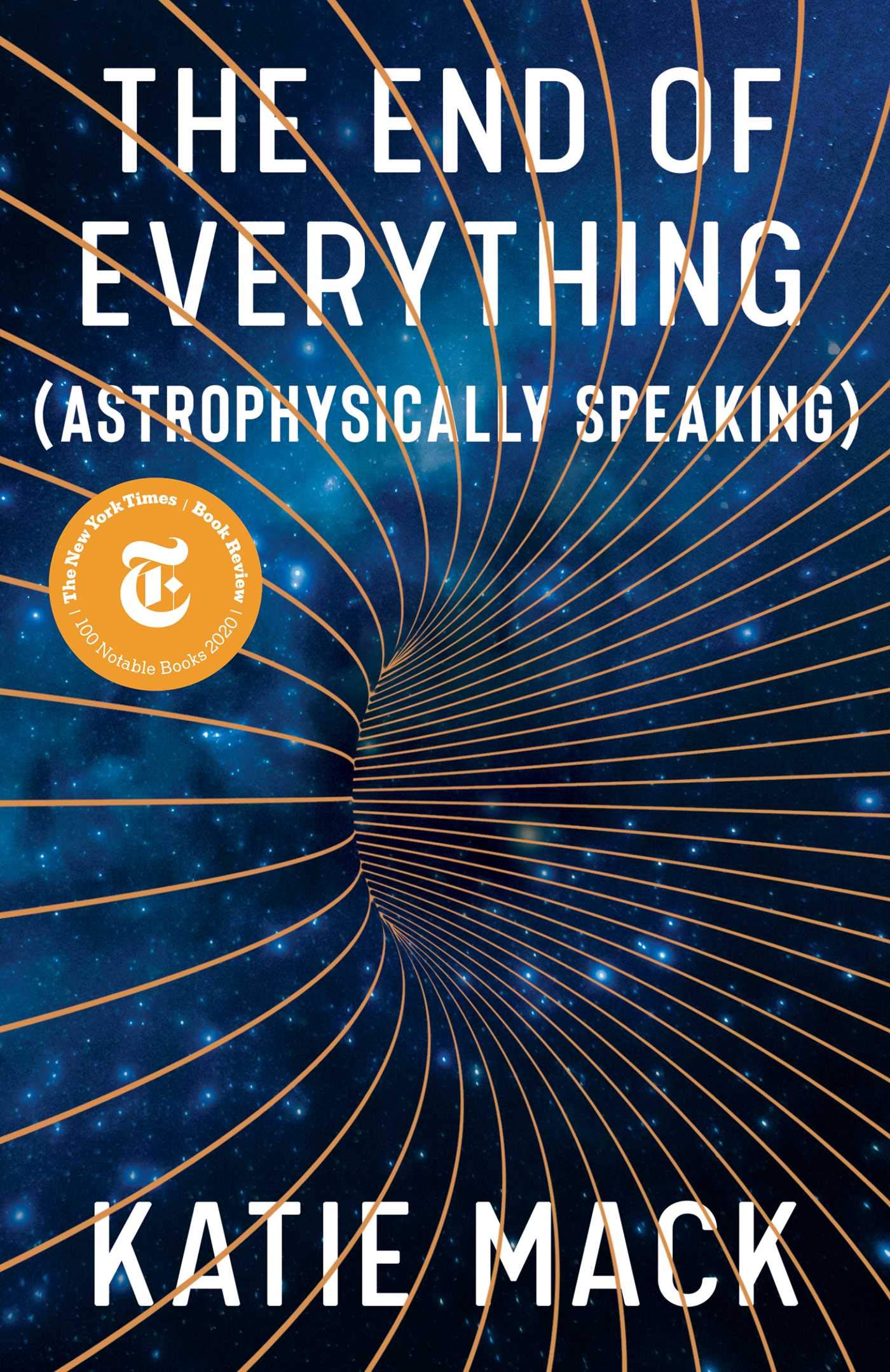
Recommended Reading: Some Cosmic PerspectiveSo goes the epigraph of Katie Mack‘s excellent new cosmology book, The End Of Everything (Astrophysically Speaking). It is an entertaining and curiously enlightening read about how the universe might end. At 240 pages, it’s a quick and accessible read that somehow manages to cover a great deal of ground. Among its topics:

  • What might the universe be?
  • Where might it have come from?
  • What the heck happened during those first fractions of a second?
  • How might the universe end?
  • Where do universes go when they die?

These first three points are critical to understanding the rest, and Mack, a theoretical cosmologist and science communicator, does an excellent job explaining them. But she spends most of the book drilling down into these last points. She discusses, among other things, the big crunch, heat death, the big rip, bouncing ‘branes, vacuum decay, and life after (heat) death.

I’d always found heat death–the irreversible transformation of all things into tepid soup–to be deeply depressing. Entropy, an unstoppable juggernaut that slowly makes things less organized, will simply have its way with everything. But the things I read in this book really made me reconsider that.

First, heat death is far from guaranteed. The big crunch–a reversal of cosmic expansion–was assumed to be the fate of the universe until George W. Bush was president. Who’s to say this won’t change again? Is another shift in thinking in fact inevitable?

Second, even if the universe’s final form is a uniform just-above-absolute-zero puddle, there’s no reason to believe this is its truly final form. Random quantum fluctuations can theoretically produce any arrangement of particles. At infinite time horizons, one could argue that these fluctuations will produce any arrangement of particles. Including a very temporary consciousness that believes itself to be a human reading this blog post on the Internet. Or a singularity… and we know where those can lead.

Even freaky apocalypse scenarios like vacuum decay, where a change in the Higgs field suddenly creates a bubble of quantum annihilation that spreads inexorably outward at the speed of light, don’t sound so bad in Mack’s telling: there’s plenty of universe out there that’s traveling away from us even faster. In fact, for all we know, this has already happened a bunch of different places. And, at the end of the day, it would be a painless way to go, and literally impossible to see coming.

So, if you’re in the mood for some surprisingly uplifting eschatology, why not pick up a copy? I got mine from the library, but if you’re looking to buy, this Amazon affiliate link will send some scratch to the blog.

What have you been reading lately?

Recommended Reading: Some Cosmic PerspectivePost + Comments (136)

  • Page 1
  • Page 2
  • Page 3
  • Go to Next Page »

Primary Sidebar

On The Road - frosty - 3rd Annual National Park/COVID Challenge - Oregon - Columbia River Gorge National Scenic Area - Engineering
Photo by frosty (4/3/26)
Donate

Election Resources

Voter Registration Info – Find a State
Check Voter Registration by Address
Election Calendar by State

Targeted Fundraising Info & Links

Recent Comments

  • glc on Open Thread: RETVRN (to the Religious Wars) (Apr 3, 2026 @ 8:37pm)
  • Soprano2 on Open Thread: RETVRN (to the Religious Wars) (Apr 3, 2026 @ 8:37pm)
  • p.a. on Open Thread: RETVRN (to the Religious Wars) (Apr 3, 2026 @ 8:35pm)
  • satby on Open Thread: RETVRN (to the Religious Wars) (Apr 3, 2026 @ 8:34pm)
  • lowtechcyclist on Open Thread: RETVRN (to the Religious Wars) (Apr 3, 2026 @ 8:33pm)

Balloon Juice Posts

View by Topic
View by Author
View by Month & Year
View by Past Author

Featuring

Medium Cool
Artists in Our Midst
Authors in Our Midst

🎈Keep Balloon Juice Ad Free

Become a Balloon Juice Patreon
Donate with Venmo, Zelle or PayPal

Calling All Jackals

Site Feedback
Nominate a Rotating Tag
Submit Photos to On the Road
Balloon Juice Anniversary (All Links)
Balloon Juice Anniversary (All Posts)

Fix Nyms with Apostrophes

Outsmarting Apple iOS 26

Balloon Juice Mailing List Signup

Order Calendar A
Order Calendar B

Social Media

Balloon Juice
WaterGirl
TaMara
John Cole
DougJ (aka NYT Pitchbot)
Betty Cracker
Tom Levenson
David Anderson
Major Major Major Major
DougJ NYT Pitchbot
mistermix
Rose Judson (podcast)

Donate

Site Footer

Come for the politics, stay for the snark.

  • Facebook
  • RSS
  • Twitter
  • YouTube
  • Comment Policy
  • Our Authors
  • Blogroll
  • Our Artists
  • Privacy Policy

Privacy Manager

Copyright © 2026 Dev Balloon Juice · All Rights Reserved · Powered by BizBudding Inc