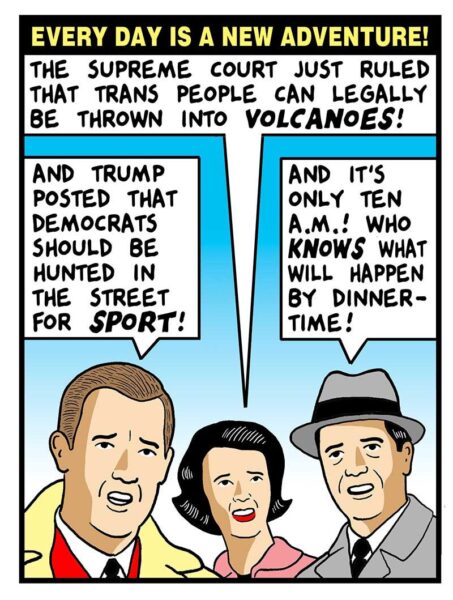
We’re getting a combo platter of shit from the Supreme Court today on its last day of term. The challenge to preventative care provisions in Obamacare failed. The nationwide injunction against Trump’s executive order redefining birthright citizenship was struck down. Deconstruction is still in progress:
This is an assault on the Reconstruction Amendments by a Neo-Confederate Court wedded to the far-right argument that those amendments were illegitimate and destroyed the original intent of the Founders, which was to create a white man’s country
— Adam Serwer (@adamserwer.bsky.social) June 27, 2025 at 3:35 PM
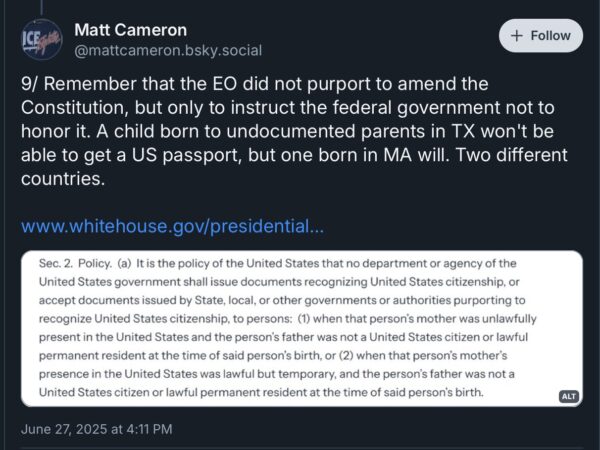
SCOTUSBlog has a live thread here. There’s a Bluesky thread by lawyer Matt Cameron which has some informed hot-takery on where this leaves us, but it is only viewable to those who have a BSky account. If you have one, click here to read. If not, this is the meat of the thread, for me:
Free Speech Coalition v. Paxton, which challenged Texas’s Internet age-verification law, is also out (FSC lost), and if you want to read Clarence Thomas’s decision, it is here. This case has been assumed to mainly impact porn sites, but as this January 2025 article at The Verge notes, (archive.is link here if you hit the paywall) it also has grim implications for an awful lot of internet content:
Numerous states have passed age verification rules for online porn, and FSC v. Paxton could directly impact whether they stand up to legal challenges. But its impact could go beyond porn. Both TikTok v. Garland and this case deal with whether the government’s interests — national security for TikTok, protecting kids in FSC — should override free speech concerns. “We’ve got two major cases in five days dealing with whether or not traditional First Amendment law still applies to internet content in the same way,” Terry says.
And several state and federal lawmakers have demanded stronger age verification for social media, sometimes alongside a proposed ban on minors using it. Opening the door to porn verification wouldn’t guarantee those efforts would succeed, but Hans says it could make legislators far more likely to try. “I think that if the Supreme Court said that some form of age verification could be constitutional, that if you’re the state in other situations, they’re going to say, well, extend that reasoning to other substantive areas of internet regulation,” he says.