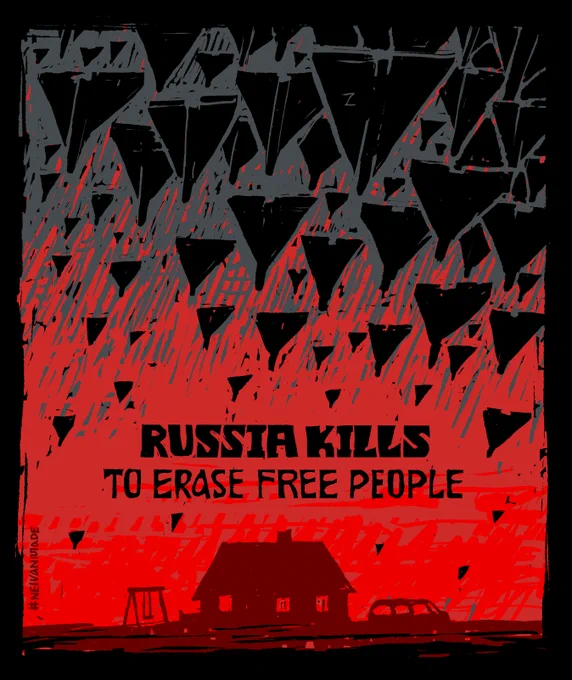
(Image by NEIVANMADE)
Just a quick Rosie update. She had her regular monthly post-chemo appointment with her regular vet today. Her regular vet is very pleased with how quickly she seems to be recovering from the stroke. While she’s still got a deficit on her left rear leg, she’s walking very well, she’s eating, she can hold her squats. Right now we’re just doing walks around the block a few times a day. Next week we’ll start going a bit longer. I’d say she’s about 70% of where she was before the stroke. Her vet says this is a very good sign. So that’s the good news. Thank you all for the good wishes, thoughts, and prayers.
Almost all of eastern and central Ukraine, about 2/3rds of the country, is under air raid alert as of 4:00 AM local time/9:oo PM EST. I expect the rest of Ukraine will be under air raid alert soon enough given that Russian Tu-95s are up over Russia and inbound towards the part of western Russia where they launch their missiles.
Russian Tu-95MS bombers takeoff reported by monitoring channels.
missiles are expected to reach our airspace by morning.
Once again, we are in for a dreadful night of waiting for missiles while being haunted by drones. Once again, we play this deadly lottery. All of this could have been prevented
— Kate from Kharkiv (@kateinkharkiv.bsky.social) February 21, 2026 at 7:16 PM
❗️4 Tu-95MS from the Olenya airfield are currently in the air, flying towards the launch lines
We expect the planes to arrive in the launch zone approximately around 04:50-06:00.
— MAKS 25 👀🇺🇦 (@maks23.bsky.social) February 21, 2026 at 7:13 PM
It is now 5:00 AM local time in Ukraine/10:00 PM EST and all of Ukraine is now under air raid alert.
Air raid alert in entire Ukraine. Russia attacks with drones and different kinds of missiles.
4:50 AM
— Kate from Kharkiv (@kateinkharkiv.bsky.social) February 21, 2026 at 9:51 PM
Two ballistic missiles are being tracked on descent on targets in Kyiv as of 5:10 AM local time/10:10 PM EST.
Russian cruise missiles are reported as overflying Sumy Oblast from east to west, a cruise missile is reported over Dnipropetrovsk Oblast, and a drone swarm over Kyiv at 5:30 AM local time in Ukraine/10:30 PM EST.
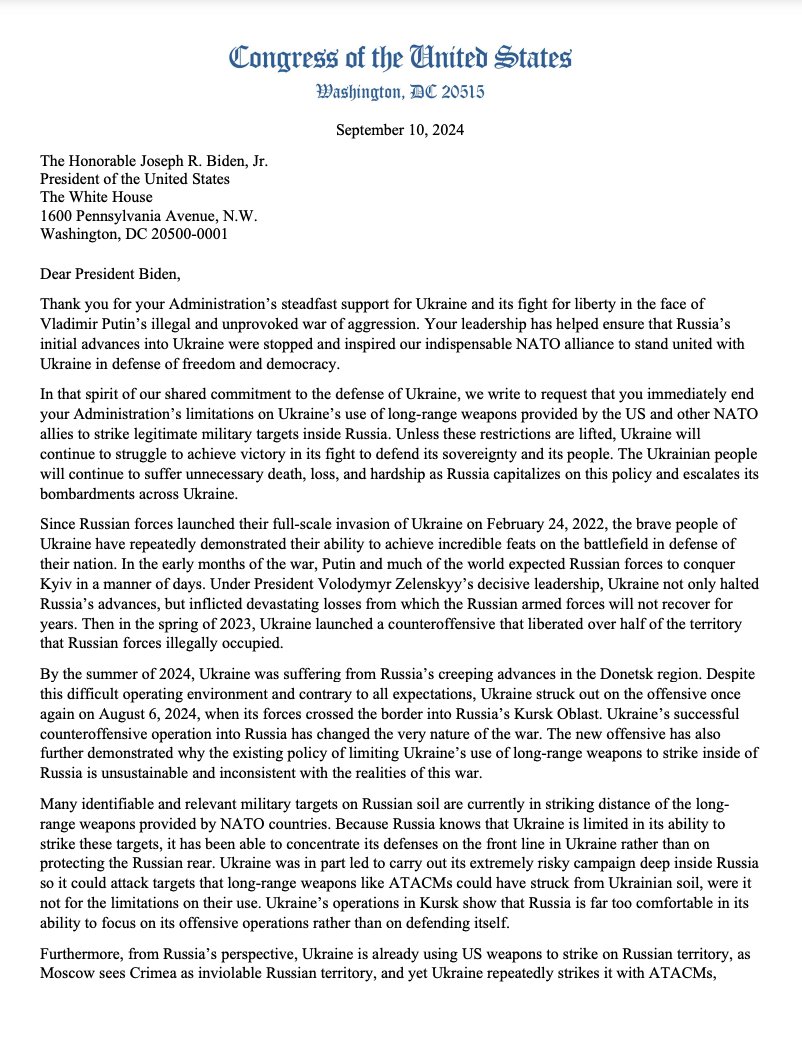
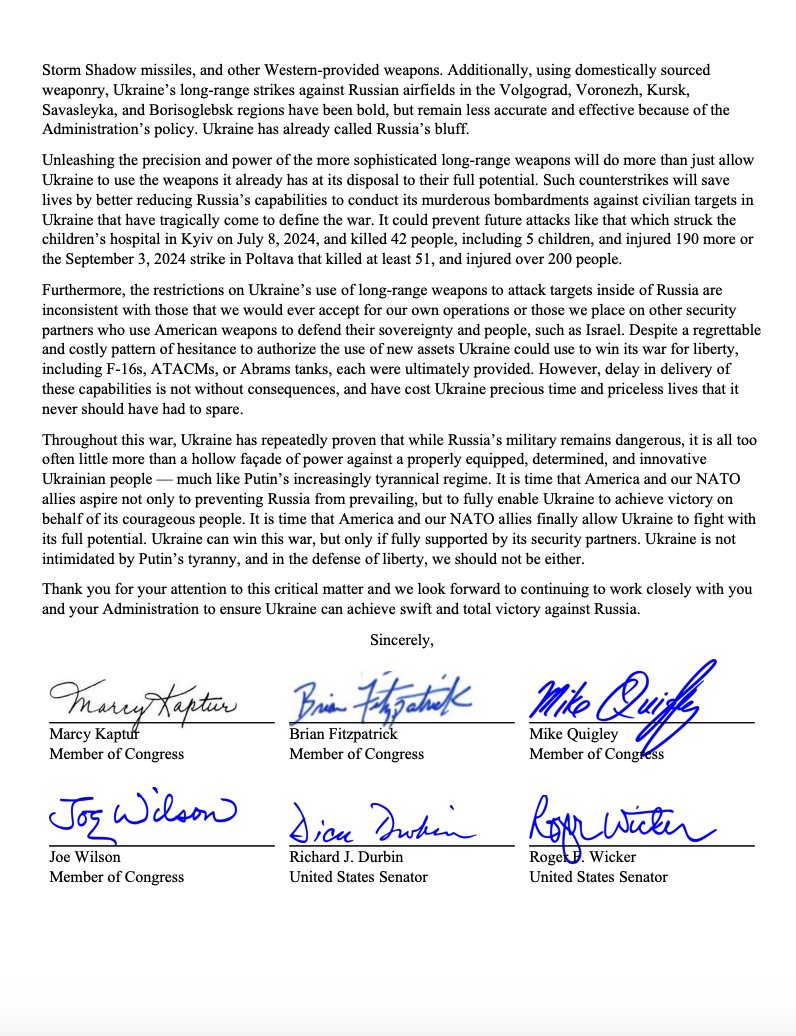
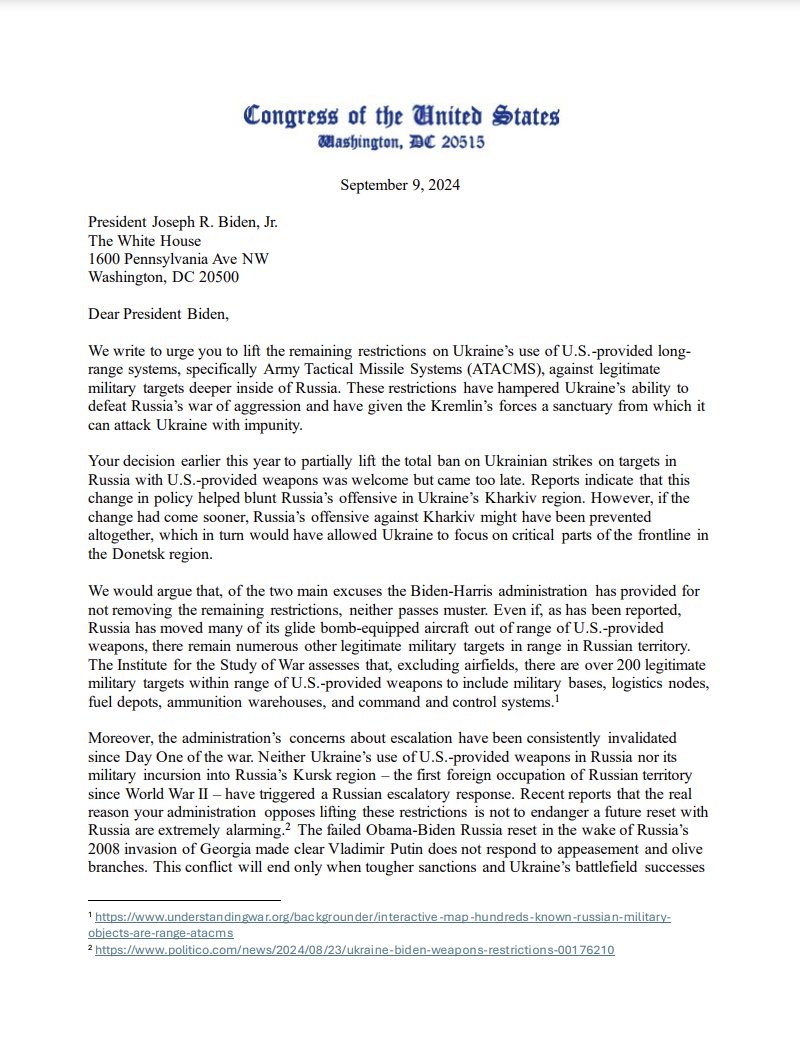
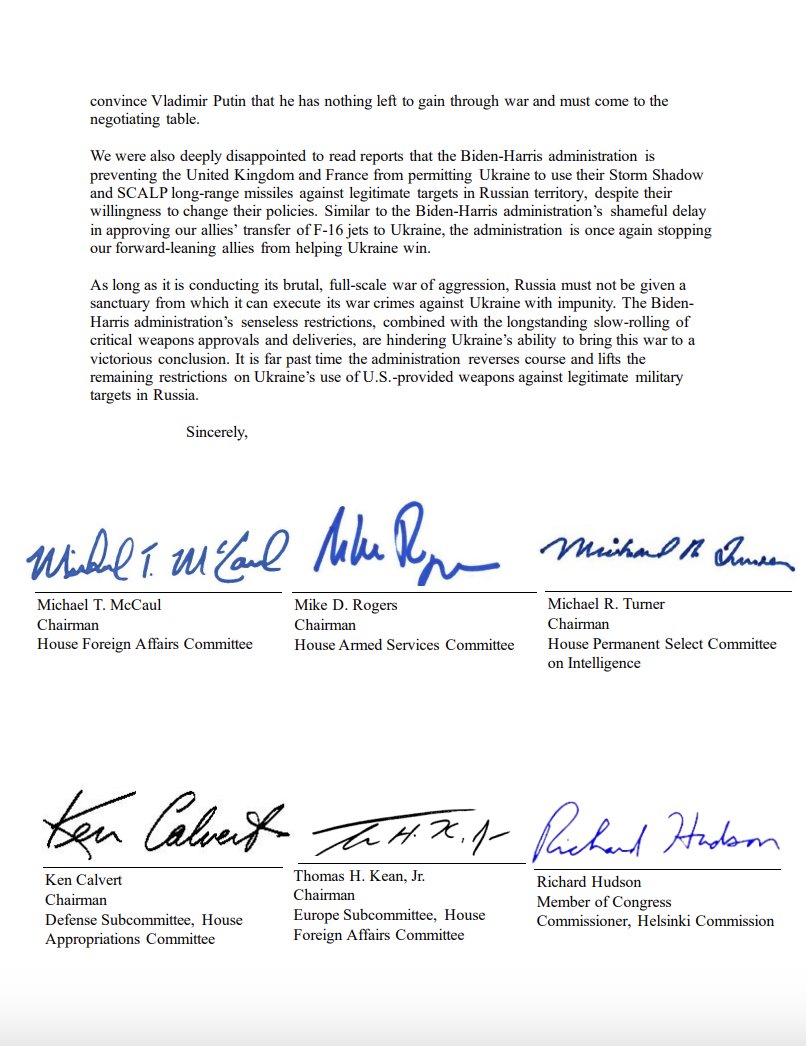
If the US, specifically the Biden administration, had both allowed the Ukrainian Air Force to begin training on F-16s earlier, as well as authorized the provision of more F-16s and not limited the Ukrainians to not using them outside of Ukraine, right now the Ukrainians would be sending a a squadron to intercept the Tu-95s before they could launch their missiles.
OTD in 2000 Ukraine sent its final strategic bomber to Russia.
Having given up strategic arms and so having no long-range ability to threaten Russia, Ukraine was subsequently rewarded with invasion and supplied with limitless grave concern.
— Darth Putin (@darthputinkgb.bsky.social) February 21, 2026 at 6:12 AM
The countries who gave their assurance that Russia would not invade Ukraine, are now on Russia’s side.
— Darth Putin (@darthputinkgb.bsky.social) February 21, 2026 at 6:12 AM
Here is President Zelenskyy’s address from earlier today. Video below, English transcript after the jump.
We Continue Working Every Day Specifically So That the Next Round of Negotiations Can Deliver Results for Ukraine, for Peace – Address by the President
21 February 2026 – 17:53
I wish you good health, fellow Ukrainians!
There are several important points worth mentioning today. First, we continue working every day specifically so that the next round of negotiations can deliver results for Ukraine, deliver results for peace. Ukraine will definitely do whatever is needed for this and will by no means stand in the way of peace.
Last time in Geneva, the American side clearly saw that it is precisely the Russians who are the reason no truly meaningful results had yet been achieved. And the next meeting must not be a wasted opportunity – it can be done.
We discussed today with Rustem Umerov some aspects of negotiation preparations. And I am grateful to everyone who is genuinely ready to help and who supports us – supports our state. My meetings with European partners are also already scheduled for next week. We will coordinate in detail so that Europe is involved in all processes and grows only stronger. I also instructed Rustem to work more closely with our friends in the Middle East and Türkiye, so that they also feel invested and can help more.
I also spoke today with Mark Rutte, Secretary General of NATO. In many respects, we share common views on the diplomatic process and on the situation in Europe. Thank you, Mark.
The second important point. I want to commend the efforts of the Security Service of Ukraine, the National Police, and the Office of the Prosecutor General – they neutralized Russian mercenaries preparing assassination attempts against our citizens. These were rather high-profile names, and preventing such crimes is a substantial result.
There were reports from Oleksandr Poklad. And this is yet another front in the ongoing protection of Ukraine’s security, the safety of Ukrainians, and the constant defense of the lives of our people – the way our Ukrainian special services, our law enforcement, and our intelligence neutralize Russian criminal activity against Ukrainians. They were preparing attacks against Ukrainian military personnel, Ukrainian intelligence officers, and Ukrainian media workers. It is important that all our Ukrainian special services and law enforcement continue to protect Ukrainian citizens in exactly this coordinated way.
And one more thing. Today, Ukraine has introduced new sanctions against the captains of vessels involved in transporting Russian oil – 225 captains. And we will continue to consistently impose sanctions and make them global against everyone who helps Russia earn money for war.
Many around the world support us, and often it is Ukrainian proposals that form the basis of partners’ sanctions. We very much count, in particular, that the next sanctions package of the European Union takes into account what is needed for real pressure on Russia over this war – for truly restricting Russia’s ability to wage it.
This includes, among other things, a ban on maritime services for vessels used by Russia. Europe should come to this. And this is something that could become a significant incentive from Europe for Russia to finally move from war to diplomacy – to real diplomacy. The war must be brought to an end.
I want to thank everyone who helps us! Thank you!
Glory to Ukraine!
First Lady Zelenska participated in an international forum on the recovery of Ukraine that was held in Vilnius today.
While Ukraine Is Moving Toward Membership in the European Union, It Is Already Part of the Free World in Values – as It Stands for Freedom and Dignity – Olena Zelenska
21 February 2026 – 17:22
First Lady of Ukraine Olena Zelenska took part online in the International Forum “Recovery of Ukraine: New Opportunities and Development Scenarios,” held in Vilnius.
The event focused on steps for Ukraine’s reconstruction, including the development of international cooperation tools, the restoration of critical infrastructure, and the energy sector. A dedicated panel addressed Ukraine’s path toward European Union membership.
“When the question is sometimes asked, ‘Why rebuild if a missile could strike again?’ – the answer is simple. If we postpone life for later, we accept the logic of destruction. But Ukraine does not live by an imposed scenario. In the very first days of the invasion, we – as a society and as a state – made a difficult and principled decision: while defending ourselves, not to stop development. That is why we are not only rebuilding housing, hospitals, schools, and universities, and restoring electricity supply – we are trying to make them better than they were before,” the First Lady emphasized.
The forum was traditionally held at the Ukrainian Center – a flagship cultural and educational space opened in Vilnius in 2022 under the patronage of the First Ladies of Ukraine and Lithuania. The Center serves as a venue for international events dedicated to Ukraine and its support.
“I am sincerely grateful to the First Lady of Lithuania, Diana Nausėdienė, Vytautas Magnus University, the team of the Ukrainian Center, volunteers, and all partners for developing this Center with such dedication. For me, this is the best illustration of European values in action. Values we fully share. Because while Ukraine is moving toward membership in the European Union, it is already part of the free world in values – as it stands for freedom and dignity. Therefore, the recovery of Ukraine is at the same time the recovery of a safe Europe,” Olena Zelenska noted.
During the forum, a Memorandum of Cooperation was also signed between the University of Silesia (Poland) and Vytautas Magnus University (Lithuania). The agreement aims to strengthen and provide long-term support for the activities of Ukrainian centers hosted at both universities.
Georgia:
A large crowd at the weekly march in Tbilisi.
Day 451 of daily, uninterrupted protests in Georgia. 🇬🇪
— Rusudan Djakeli (@rusudandjakeli.bsky.social) February 21, 2026 at 11:31 AM
#GeorgiaProtests
Day 451— Publika.ge (@publikage.bsky.social) February 21, 2026 at 2:29 PM
For 451 consecutive days, Georgians have taken to the streets in 8+ cities, resisting an illegitimate, pro-Russian regime. This is Tbilisi today.
— Rusudan Djakeli (@rusudandjakeli.bsky.social) February 21, 2026 at 11:44 AM
Not too bad for Day 451 consecutive #GeorgiaProtests, is it?
1. Further regime isolation, a Russian proxy and sanctions evasion enabler, pro-Iran, pro-CCP;
2. Targeted sanctions;
3. Aid to CSOs & media;
4. Int’l investigation into chemicals use against protesters;📷 @rusudandjakeli.bsky.social
— Marika Mikiashvili 🇬🇪🇺🇦🇪🇺 (@marikamikiashvili.bsky.social) February 21, 2026 at 12:24 PM
Apparently, food provided to the army and the police in Georgia was so toxic that toxicity expertise wasn’t conducted out of concerns that it could harm the expert…
— Marika Mikiashvili 🇬🇪🇺🇦🇪🇺 (@marikamikiashvili.bsky.social) February 21, 2026 at 7:19 AM
The Czech Republic:
In Prague thousands of Czechs gathered in the city center for the “Together for Ukraine” rally to mark the fourth anniversary of russia’s full-scale invasion of Ukraine.
— Kate from Kharkiv (@kateinkharkiv.bsky.social) February 21, 2026 at 12:40 PM
From the stage, Czech President Petr Pavel addressed the crowd, stressing that despite political differences, the Czech Republic must help Ukraine.
Czechs 🇨🇿❤️🇺🇦
— Kate from Kharkiv (@kateinkharkiv.bsky.social) February 21, 2026 at 12:40 PM
Hungary and Slovakia:
Fico and Orbán are using the damaged Friendship pipeline to blackmail Ukraine, ignoring the obvious: the energy supply would be secure if russia hadn’t invaded. Buying russian oil now literally funds the murder of Ukrainians.
— Kate from Kharkiv (@kateinkharkiv.bsky.social) February 21, 2026 at 11:28 AM
This reeks of the bothsidism, rhetoric the Trump administration loves, and the timing – just after Rubio’s visit – is telling.
— Kate from Kharkiv (@kateinkharkiv.bsky.social) February 21, 2026 at 11:28 AM
“IF THE UKRAINIAN PRESIDENT DOES NOT RESUME OIL SUPPLIES TO SLOVAKIA ON MONDAY, ON THAT SAME DAY I WILL ASK THE RELEVANT SLOVAK COMPANIES TO STOP EMERGENCY ELECTRICITY SUPPLIES TO UKRAINE.”- Slovakia PM Fico
literally, go fuck yourself.
— Kate from Kharkiv (@kateinkharkiv.bsky.social) February 21, 2026 at 7:22 AM
Orban likened EU attempts to defeat Russia and claim reparations to Napoleon and Hitler’s failures. Kallas will be next to try he suggested.
— WarTranslated (Dmitri) (@wartranslated.bsky.social) February 21, 2026 at 1:06 PM
The US:
Let me get this straight:
🔹Trump tells the EU to build up its own defences
🔹Trump threatens the EU repeatedly and signals unreliability as a defence partner
🔹Now Trump is upset the EU wants a buy-EU defence policy to build local manufacturing?What did you expect to happen??
— Maria Drutska (@mariadrutska.bsky.social) February 21, 2026 at 2:09 AM
He didn’t expect anything to happen other than the EU and its member states agreeing to give him whatever he demanded. He has no idea how defense management works, how a defense industrial base is run, or even how an alliance works. All he cares about is trying to force the EU, its member states, and the other NATO members to capitulate to whatever bonkers demand he makes on any given day.
Considering everything the Trump administration is doing, this is not surprising. but still heartbreaking.
A slow return to business as usual with genocidal invaders, even as they continue murdering Ukrainians and destroying our country.
— Kate from Kharkiv (@kateinkharkiv.bsky.social) February 21, 2026 at 9:13 AM
From The New York Times:
Russia’s return to the global sporting stage after years of banishment because of cheating schemes and its invasion of Ukraine has found an influential source of support from the Trump administration.
The news that a Russian team will compete at next month’s Paralympics was greeted with dismay across Europe. But Paulo Zampolli, President Trump’s special representative for global partnerships, endorsed Russian participation, saying in a text message: “I think sport is for all.”
His comments were at odds with those of European leaders and those from Ukraine, which said its team would boycott the competition’s opening ceremony. The Paralympics’ host nation, Italy, expressed “its absolute opposition to the International Paralympic Committee’s decision.”
Even as Russia was barred from fielding a team at the Winter Games in Italy, which conclude on Sunday, momentum has been building for ending the country’s pariah status in global sports.
The president of FIFA, the governing body for world soccer, said this month that he would like to see Russia return to the sport’s international competitions. And the president of the International Olympic Committee, Kirsty Coventry, said that sports must be a “neutral ground” and a “place where every athlete can compete freely.”
Her words sounded much like those of Mr. Zampolli, who met with Russia’s sports minister in January at talks hosted by the Olympic Council of Asia, an umbrella body for the region. Mr. Zampolli also attended the opening ceremony of the Olympics with Vice President JD Vance and Secretary of State Marco Rubio.
The U.S. government was not among the 35 signatories to a statement condemning the Paralympic governing body’s initial decision to lift its suspension of Russia in September.
The governing body, known as the I.P.C., said this week that six Russian athletes and four from Belarus — which was barred over its support for Russia’s 2022 invasion of Ukraine — had been awarded the equivalent of wild card entries for skiing and snowboarding events next month. It would be Russia’s first participation in the Paralympics since it hosted the event in Sochi in 2014.
The I.O.C. formally banned Russia over its move in 2023 to absorb the official sports institutions in several occupied regions of Ukraine. Russian officials have argued in recent months that they have instituted administrative changes that mean the ban should be lifted.
Russia’s sports minister, Mikhail V. Degtyarev, has said that he expects the I.O.C.’s executive board to decide by May whether to lift the ban. That leaves open the possibility that a Russian team could participate in the 2028 Summer Games in Los Angeles.
Even if the I.O.C. reinstates Russia, federations governing individual sports at the Games must agree to lift their own bans. A few have done so, including those for judo and taekwondo.
Some senior I.O.C. officials have backed Russian efforts at reinstatement.
More at the link,
Once again, the International Olympic Committee is a global criminal organization masquerading as an international non-governmental organization.
🇺🇸🇺🇦 A large-scale rally was held in Washington to mark the fourth anniversary of Russia’s full-scale war against Ukraine.
Hundreds of people gathered near the Russian embassy. The rally was part of solidarity events taking place in various countries around the world.
— Savchenko Volodymyr (@savchenkoua.bsky.social) February 21, 2026 at 7:06 PM
Back to Ukraine.
OTD in 2014 we sent masked soldiers to occupy Crimea
2014 “they’re not Russian soldiers but local militias. Russia has nothing to do with them”
2015 “They were not Russian soldiers but we “stood behind them””
Later 2015 “They were Russian soldiers”But we are not lying this time
— Darth Putin (@darthputinkgb.bsky.social) February 21, 2026 at 11:38 AM
You were given the choice between war and dishonor. You chose dishonor. And you have war.
— Darth Putin (@darthputinkgb.bsky.social) February 21, 2026 at 11:38 AM
Soon enough you’ll be connecting all these dots to the forthcoming general mobilisation that you don’t think I’ll risk doing.
But losing this war is a far bigger risk.
— Darth Putin (@darthputinkgb.bsky.social) February 21, 2026 at 7:41 AM
If you haven’t read this long-read yet, you absolutely should. It’s worth every minute.
www.theguardian.com/world/ng-int…
— Maria Drutska (@mariadrutska.bsky.social) February 21, 2026 at 3:10 PM
From The Guardian: (emphasis mine)
William Burns had travelled halfway around the world to speak with Vladimir Putin, but in the end he had to make do with a phone call. It was November 2021, and US intelligence agencies had been picking up signals in the preceding weeks that Putin could be planning to invade Ukraine. President Joe Biden dispatched Burns, his CIA director, to warn Putin that the economic and political consequences if he did so would be disastrous.
Fifteen years earlier, when Burns was US ambassador in Moscow, Putin had been relatively accessible. The intervening years had concentrated the Russian leader’s power and deepened his paranoia. Since Covid had emerged, few had been granted face time. Putin was squirrelled away at his lavish residence on the Black Sea coast, Burns and his delegation learned, and only phone contact would be possible.
A secure line was ready in an office at the presidential administration building on Moscow’s Old Square, and Putin’s familiar voice came through the receiver. Burns laid out the US belief that Russia was readying an invasion of Ukraine, but Putin ignored him and ploughed on with his own talking points. His intelligence agencies had informed him, he said, that there was an American warship lurking over the Black Sea horizon, equipped with missiles that could reach his location in just a few minutes. It was evidence, he suggested, of Russia’s strategic vulnerability in a unipolar world dominated by the US.
The conversation, as well as three combative face-to-face discussions with Putin’s top security officials, seemed extremely ominous to Burns. He left Moscow far more concerned about the prospect of war than he had been before the trip, and he relayed his gut feeling to the president.
“Biden often asked yes/no questions, and when I got back, he asked if I thought Putin was going to do it,” Burns recalled. “I said: ‘Yes’.”
Three and a half months later, Putin ordered his army into Ukraine, in the most dramatic breach of the European security order since the second world war. The story of the intelligence backdrop to those months – how Washington and London garnered such detailed and accurate insight into the Kremlin’s war plans, and why the intelligence services of other countries did not believe them – has never before been told in full.
This account is based on interviews conducted over the past year with more than 100 intelligence, military, diplomatic and political insiders in Ukraine, Russia, the US and Europe. Many spoke without attribution to discuss events that are still sensitive or classified; those quoted by name are referred to by their job titles at that time.
It is the story of a spectacular intelligence success, but also one of several intelligence failures. First, for the CIA and MI6, who got the invasion scenario right but failed to accurately predict the outcome, assuming a swift Russian takeover was a foregone conclusion. More profoundly, for European services, who refused to believe a full-scale war in Europe was possible in the 21st century. They remembered the dubious intelligence case presented to justify the invasion of Iraq two decades previously, and were wary of trusting the Americans on what seemed like a fantastical prediction.
Most crucially, the Ukrainian government was thoroughly unprepared for the oncoming assault, with President Volodymyr Zelenskyy spending months dismissing increasingly urgent American warnings as scaremongering, and quashing last-minute concerns among his own military and intelligence elite, who eventually made limited attempts to prepare behind his back.
“In the final weeks, the intelligence leaders were starting to get it, the mood was different. But the political leadership just refused to accept it until right at the end,” said one US intelligence official.
Four years on, there are many lessons to be drawn from these events about how intelligence is collected and analysed. Perhaps the most pertinent, as the world appears more unpredictable than at any time in recent history, is that it is dangerous to dismiss a scenario because it seems to fit outside the realm of what is rational or possible.
“I felt the evidence we presented to them was overwhelming. It’s not like we held back something that, if only they had seen it, would have made all the difference,” said Jake Sullivan, Biden’s national security adviser, on why European allies did not believe the Americans. “They were just seized with the conviction that this simply made no sense.”
The CIA discovered an awful lot about Putin’s plans to invade Ukraine, but one thing they never worked out for sure is when he first made up his mind to go all-in. Sifting through the evidence later, like detectives at a crime scene, some of the agency’s analysts pinpointed the first half of 2020 as the most likely moment.
During those months, Putin passed constitutional amendments to ensure he could stay in power beyond 2024. Then, locked away in isolation for months during Covid, he devoured books on Russian history and pondered his own place in it. Over the summer, the violent crushing of a protest movement in neighbouring Belarus left President Alexander Lukashenko weaker and more reliant on the Kremlin than ever. It opened up the possibility of forcing Lukashenko to allow the use of Belarusian territory as an invasion launchpad.
Around the same time, a team of FSB poisoners slipped novichok nerve agent into the underpants of Alexei Navalny, the one opposition politician with the potential to command mass public support, sending him into a coma. Back then, these all seemed like discrete events. Later, they started to look like Putin getting his ducks in a row before implementing the big Ukraine gambit he felt would cement his role in history as a great Russian leader.
Hints of that plan first came into focus in the spring of 2021, when Russian troops began building up along Ukraine’s borders and in occupied Crimea, supposedly for training exercises. The US received intelligence suggesting Putin could use an annual set-piece speech, due on 21 April, to lay out the case for military action in Ukraine. When Biden was briefed on the intelligence, a week before the speech, he was so alarmed he called Putin directly. “He raised concerns about the buildup and called for a de-escalation, as well as proposing a summit in the coming months, which we knew would be of interest to Putin,” said Avril Haines, Biden’s director of national intelligence.
When Putin gave the speech, it was much less bellicose than expected, and a day later the Russian army announced its military exercises at the border were over. It seemed the summit offer had successfully defused the threat, and when the two leaders met in Geneva in June, Putin hardly mentioned Ukraine.
It was only in hindsight that it became clear why: he had already decided on a non-diplomatic solution.
Four weeks after the Geneva summit, Putin published a lengthy, rambling essay about the history of Ukraine, in which he went back as far as the ninth century to make the argument that “true sovereignty of Ukraine is possible only in partnership with Russia”.
The screed raised eyebrows, but attention in London and Washington was soon diverted by the chaotic withdrawal from Afghanistan. In September, Russian troops began another buildup along Ukraine’s borders; within a month it had reached a mass that was hard to ignore. Washington collected new intelligence about Russian plans, more detailed and much more shocking than in spring. Back then, the assumption had been that Russia could attempt a formal annexation of the Donbas region, or in a maximalist scenario, might try to hack a land corridor through southern Ukraine, linking Donbas to occupied Crimea. Now, it looked as if Putin could be planning something bigger. He wanted Kyiv.
Many in the US political elite were highly sceptical, but the intelligence analysts were worked up over what they were seeing. “There was enough information coming in that made it clear this was no longer a remote possibility,” said Haines. When Burns came back from Moscow, the alarm bells rang even louder. Whether or not the intelligence was right, Biden said, it was time to start planning.
In mid-November, he dispatched Haines to Brussels. There, at the annual meeting of Nato-member intelligence heads, she presented the US belief that there was now a real chance of a massive Russian invasion of Ukraine. Richard Moore, the head of Britain’s MI6, backed her up. As part of the Five Eyes intelligence-sharing alliance, Britain had seen most of what the US had collected, and also had its own intelligence channels that pointed towards the possibility of an invasion. The primary response in the room, however, was scepticism. Some dismissed the idea of an invasion out of hand. Others expressed a fear that if Nato adopted a strong posture in response, it could prove counterproductive, provoking exactly the scenario the US claimed to be concerned about.
Managing that perception would be in the back of US and British minds over the next months. “We had to make sure we weren’t going to do anything that gave them an excuse to invade,” said Chris Ordway, a senior official working on the region at Britain’s Ministry of Defence. At the same time, London and Washington believed Russia needed only two more months to be ready for an invasion, and they wanted to raise the alarm.
Biden ordered his team to share as much intelligence with allies as possible, to help them understand why Washington was so worried. He also suggested a declassification push to get some of the information into the public domain. This had to be done carefully, to avoid exposing how Washington had obtained the evidence. “These are sources and methods that we put our blood and sweat and tears into obtaining, and they can put people’s lives at risk if lost,” said Haines.
A system was implemented whereby officials from different intelligence agencies would have “an opportunity to weigh in on anything before it went out the door”, she said, to make sure nothing slipped through that could give away a source. Over the next weeks, the US downgraded more sensitive intelligence than at any time in recent memory for allies and often for the general public, too. “We were getting classified briefings from the Americans, and then a few hours later you’d read the exact same information in the New York Times,” said one European official.
At the end of October, the CIA and MI6 sent memos to Kyiv outlining their alarming new intelligence assessments. The next week, after Burns visited Moscow, two US officials on the trip peeled away from the delegation and flew to Kyiv where they briefed two senior Ukrainian officials on the US fears and the CIA director’s conversations in Moscow. “We basically said: ‘We will follow up. You’ll see the intel. This is not a normal warning, this is really serious. Trust us,’” said Eric Green, one of the US officials. The Ukrainians looked sceptical.
In mid-November, the British defence secretary, Ben Wallace, visited Kyiv and told Zelenskyy London believed a Russian invasion was now a matter of “when”, not “if”. He urged Zelenskyy to start preparing the country for war. “You can’t fatten up a pig on market day,” Wallace told the Ukrainian president, according to a source briefed on the meeting. Zelenskyy appeared to be in passive listening mode.
Zelenskyy had been elected in 2019 on a platform of pursuing peace negotiations to end the conflict Russia had launched in eastern Ukraine in 2014. He no longer believed he could do a deal with Putin, but he feared that public talk of an even bigger war would prompt panic in Ukraine. This could lead to an economic and political crisis, collapsing the country without Russia needing to send a single soldier across the border. This, he suspected, was Putin’s plan all along. He grew increasingly irritated at the Americans and British, who alongside the private warnings were starting to talk about the invasion threat in public. In November, he dispatched one of his most senior security officials on a top-secret mission to a European capital to deliver a message to political leaders via intelligence channels: the war scare is fake, and is all about the US trying to leverage pressure on Russia.
Few in Ukraine believed a full-scale invasion was likely, but the country’s intelligence agencies had been picking up worrying signs of increasing Russian activity. Ivan Bakanov, the head of the SBU domestic agency, recalled that while Russian spy services had traditionally focused on trying to recruit high-level Ukrainian sources, in the year prior to the invasion “they were going after everyone”, including chauffeurs and low-level functionaries. Often, these pitches were “false flag”: the Russian recruiters would pretend to be from one of Ukraine’s own intelligence agencies.
The SBU also tracked clandestine meetings between officers from Russia’s FSB and Ukrainian civil servants or politicians. These meetings often took place in luxury hotels in Turkey or Egypt, where the Ukrainians travelled under the guise of tourism. Russia hoped these people, motivated variously by ideology, ego or money, would act as a fifth column inside Ukraine when the time came.
“Before I came to the SBU, I also thought we could do a deal with the Russians,” said Bakanov, who was an old business partner of Zelenskyy’s and had no intelligence background when appointed in 2019. “But when you see every day how they are trying to kill and recruit people, you understand that they have a different plan, that they are saying one thing and doing another.”
Still, the prevailing mood in Kyiv was that the US warnings were overegged. Ukraine had been fighting Russian proxy forces in the Donbas for eight years, but the idea of a full-fledged war – with missile attacks, tank columns and a march on Kyiv – seemed unimaginable.
A European intelligence official said this line of thought remained fairly constant in briefings from Ukrainian counterparts in the months leading up to the invasion. “The message was: ‘Nothing is going to happen, it’s all sabre-rattling,’” said the official. “They thought the absolute maximum possible was a skirmish in the Donbas.”
Later, when it turned out that the US and Britain had it right all along, many wondered what it was that had allowed them to be so sure. Was there a mole in Putin’s inner circle, passing on the war plans to their CIA or MI6 handlers?
“Often, it’s presented as ‘we found the plans’ but it definitely was not that simple,” said Haines. The most obvious indicator was partly visible on commercial satellite imagery: tens of thousands of Russian troops moving into positions close to the border with Ukraine.<
“These troop movements were unexpected and you had to work really quite hard to come up with explanations for why you’d do this, other than that you want to use them,” said a senior official at DI, the British military intelligence service.
Much more at the link.
I want to highlight this part:
“I felt the evidence we presented to them was overwhelming. It’s not like we held back something that, if only they had seen it, would have made all the difference,” said Jake Sullivan, Biden’s national security adviser, on why European allies did not believe the Americans. “They were just seized with the conviction that this simply made no sense.”
Part of the job of being a senior advisor is to make sure the senior official that one is advising have the context necessary to understand why things do make sense even if they seem to make no sense. As I’ve written here before, what Putin did, has been, and is continuing to do makes no sense except within his own context. A context that is an ahistorical heavily mythologized understanding of Russia and its history. A heavily mythologized ahistorical history that he has helped to contribute to. Within this context, what Weber called bounded rationality, what Putin is doing makes sense. The key is to ensure that the senior leaders and decision makers understand this context.
Video of the launch of FP-5 “Flamingo” cruise missiles at the Votkinsk plant last night
— 🦋Special Kherson Cat🐈🇺🇦 (@specialkhersoncat.bsky.social) February 21, 2026 at 4:15 PM
Mi-8 helicopter crew intercepts Russian Shahed kamikaze drones during a combat mission.
— 🦋Special Kherson Cat🐈🇺🇦 (@specialkhersoncat.bsky.social) February 21, 2026 at 6:32 AM
Sumy Oblast:
Russia struck a car in Sumy Oblast, killing four civilians — two brothers, one of them 17, and a married couple.
— Iryna Voichuk (@irynavoichuk.bsky.social) February 21, 2026 at 3:50 PM
Tragedy in Sumy region: A Russian drone struck an ambulance, killing four people‼️
Among the victims were two brothers—one just 17 years old—and a married couple. The woman was a medic.
— Kate from Kharkiv (@kateinkharkiv.bsky.social) February 21, 2026 at 3:53 PM
The brothers were being taken to the hospital after being injured by an explosive device. On the way, Russian forces deliberately targeted the emergency vehicle with a strike drone.
Only the driver survived; he is now in the hospital.
— Kate from Kharkiv (@kateinkharkiv.bsky.social) February 21, 2026 at 3:53 PM
Kharkiv:
Russian drones over Kharkiv right now ‼️ air defense is active ‼️
— Kate from Kharkiv (@kateinkharkiv.bsky.social) February 21, 2026 at 3:46 PM
Odesa:
Russia is terrorizing Odesa, striking it almost daily. Historical buildings, cafés, homes, schools, and more are being destroyed.
This is one of the city’s schools after last night’s russian attack:
— Kate from Kharkiv (@kateinkharkiv.bsky.social) February 21, 2026 at 1:27 PM
Lviv:
🇺🇦🙏 Today at 00:30, a report of a break-in at a store on Danylyshyna Street, 20 in Lviv, was received by the number “102”.
After arrival of patrol police crew at the scene, an explosion was heard. Upon the arrival of the second crew, another explosion occurred.
23-year-old policewoman was killed.
— The Ukrainian Review (@theukrainianreview.bsky.social) February 21, 2026 at 7:47 PM
❗️Screams of people and a large number of special services at the scene of the explosion in Lviv
— MAKS 25 👀🇺🇦 (@maks23.bsky.social) February 21, 2026 at 6:11 PM
🙏🙏🙏
— MAKS 25 👀🇺🇦 (@maks23.bsky.social) February 21, 2026 at 6:11 PM
🙏🇺🇦Video of second explosion in Lviv shows injured police officers
— MAKS 25 👀🇺🇦 (@maks23.bsky.social) February 21, 2026 at 6:39 PM
Russian occupied Luhansk Oblast:
💥 An oil depot in Luhansk has been hit once again. Locals report a major fire.
— MAKS 25 👀🇺🇦 (@maks23.bsky.social) February 21, 2026 at 7:49 PM
Russian occupied Zaporizhzhia Oblast:
💡❌ The power went out in the temporarily occupied territories in Zaporizhia region, something is burning also!
— MAKS 25 👀🇺🇦 (@maks23.bsky.social) February 21, 2026 at 7:11 PM
Huliaipole, Zaporizhzhia Oblast:
🇺🇦 Defense Forces have restored control over more than 300 sq. km in the South, – Voloshyn
A Defense Forces of Ukraine operation is underway in Hulyaipole and neighboring areas, during which Ukrainian units are conducting counterattacks and assault operations.
— MAKS 25 👀🇺🇦 (@maks23.bsky.social) February 21, 2026 at 8:29 AM
Zaporizhzhia Oblast:
During a flight over the Zaporizhzhia region, a pair of FP-2 guided strike drones detected the launch site of Russian missiles. Maintaining visual contact, the drone team executed a precision strike, successfully destroying the Tornado-S (BM-30 Smerch) launcher while it was still at the launch site.
— 🦋Special Kherson Cat🐈🇺🇦 (@specialkhersoncat.bsky.social) February 21, 2026 at 3:24 AM
Russian occupied Mariupol:
Mariupol, explosions in the port 👀💥
— MAKS 25 👀🇺🇦 (@maks23.bsky.social) February 21, 2026 at 5:37 PM
Russian occupied Crimea:
Photos of the Russian Be-12 amphibious aircraft as well as two Project 22460 Okhotnik border patrol vessels in the cameras of Ukrainian guided strike drones published by the Ukrainian General Staff.
— 🦋Special Kherson Cat🐈🇺🇦 (@specialkhersoncat.bsky.social) February 21, 2026 at 10:00 AM
Ukraine’s Unmanned Systems Forces destroyed a Tornado-S MLRS and struck an oil depot in Hvardiyske near Simferopol in occupied Crimea.
— WarTranslated (Dmitri) (@wartranslated.bsky.social) February 21, 2026 at 9:37 AM
The Kharkiv-Russian border:
Hart brigade drone operators found a hangar full of Russian equipment and ammo on the Kharkiv border. They punched a hole through a window with one drone then sent another inside to detonate it.
— WarTranslated (Dmitri) (@wartranslated.bsky.social) February 21, 2026 at 6:03 AM
The Autonomous Republic of Mordvinia, Russia:
In Russia’s Saransk, after a UAV strike, the ‘Electrorectifier’ plant, part of the military-industrial complex, is ablaze. 👀
— Kate from Kharkiv (@kateinkharkiv.bsky.social) February 21, 2026 at 8:10 AM
Volgograd Oblast, Russia:
The February 12 overnight Flamingo missile strike on the GRAU arsenal in Kotluban destroyed a 3,600 sq m bunker CyberBoroshno analysts report.
— WarTranslated (Dmitri) (@wartranslated.bsky.social) February 21, 2026 at 9:01 AM
Tver Oblast, Russia:
Satellite imagery reveals damage from the February 7 strike on the Redkino chemical plant in Tver region. The hit landed near a facility making lubricants for Russia’s Defense Ministry Radio Svoboda reports.
— WarTranslated (Dmitri) (@wartranslated.bsky.social) February 21, 2026 at 7:30 AM
Samara Oblast, Russia:
NASA satellite signatures confirm a massive fire at the Neftegorsk gas processing plant in Russia’s Samara region.
— WarTranslated (Dmitri) (@wartranslated.bsky.social) February 21, 2026 at 4:27 AM
That’s enough for tonight.
Your daily Patron!
There are no new Patron skeets or videos today.
Here is some adjacent material.
Update on “Ash” the cat rescued in freezing Kupiansk, eastern Ukraine: she was in bad shape, but after a blood transfusion & antibiotics, her fever is down and she’s doing much better. 🙏 Look at how sweet she is to the doctor!
— Nate Mook (@natemook.bsky.social) February 21, 2026 at 10:44 AM
Open thread!