Happy Monday! Looks like a great week ahead!
Albatrossity
In late August I took a long road trip (nearly 3000 miles) from my home in eastern Flyover Country to see some birds in the mountain ranges/sky islands of southeastern Arizona. I had some recent health news that was not good, and it seemed like a fine time to hit the road. I enjoyed the trip, I enjoyed the destination, and you all will see some bird photos from that photo walkabout in the next few Mondays.
But I beg your indulgence today, as this post is not about birds. As the election season looms, and we face a stark choice between a government that can work for all of us and a government that wants to deport some people and immiserate many others, I chose to make this Monday morning post about history and what it can teach us. The lesson I took was that we cannot, must not, go backward.
On other trips west, I’ve stopped to see the site of the Amache Camp in eastern Colorado (aka Grenada War Relocation Center), one of the 10 sites where Japanese-Americans were interned during the years 1942-1945. I spent more time there on this trip; if you have not visited one of these historic sites, I’d recommend it. Bill had a lovely post about a more famous camp, Manzanar, a while back, and there are a couple more easterly ones in southeastern Arkansas. Amache is not as scenic or mountainous as Manzanar, it is barely west of the KS/CO border, a mile south of US-50 in a flat and hot part of Colorado. It’s not exactly a touristy part of that state, but if you ever find yourself in the area, take an hour or so to visit it. But since most of you will never get there, here are some photos from my most recent visit. Most of them are unreadable on this page, but much larger versions are available by clicking through the links provided.
On The Road – Albatrossity – The past is not dead, it’s not even past.Post + Comments (29)
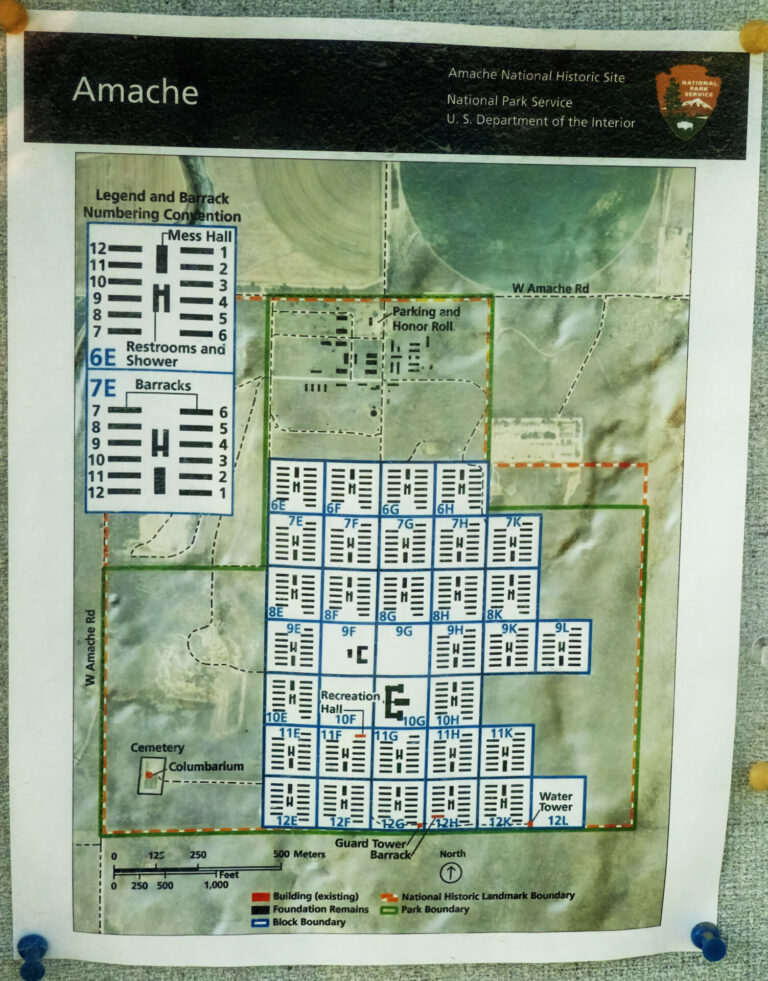
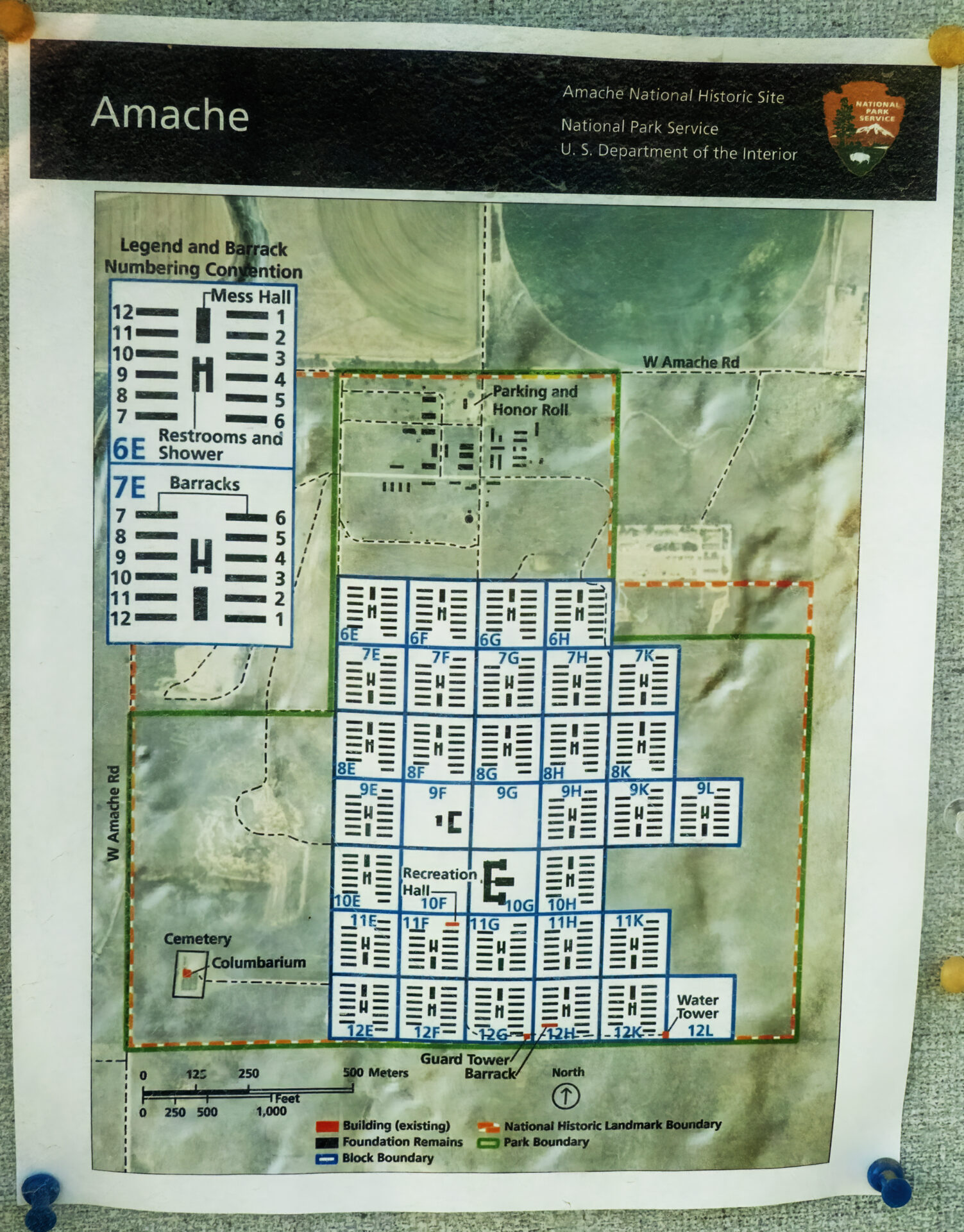
This is a map of the camp. Even though the War Relocation Authority preferred not to use that word, it was basically a camp modeled after military POW camps of the era. During the time it was in operation, it held approximately 7300 citizens, and had 560 buildings which were mostly demolished after the war. Generally just the foundations remain today. Most of them were flimsy barracks buildings, poorly insulated and with no cooking or toilet facilities. The entire camp was surrounded by barbed wire, with guard towers, searchlights, and armed sentries. Click here for larger image.